

Down a Rabbit Hole: From Zelda Sayre to Murder in 1920s Manhattan
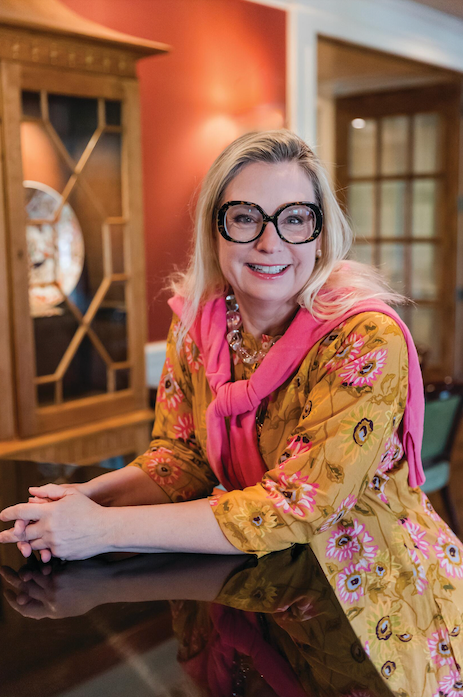
Author Julie Mulhern shares how she traveled down a rabbit hole of discovery that eventually led to her murder mystery set in 1920s New York.
It started with Zelda Sayre. My father kept Nancy Milford’s excellent biography on the shelf in his library, and I first read it at the age of 12, fascinated by the girl who lived life on her own terms. Zelda was born into a wealthy Southern family and became locally famous in Montgomery, Alabama, for her beauty and high spirits even before she married author F. Scott Fitzgerald.
Zelda led me to Sara and Gerald Murphy (the inspiration for Nicole and Dick Diver in Zelda's husband’s Tender Is the Night). I absolutely devoured Amanda Vaill’s Everybody Was So Young. It’s a fascinating biography of the couple and the era, but, by far, its most compelling character is Dorothy Parker.
Dorothy Parker began an obsession with the Algonquin Round Table and a need to access The New Yorker archives so that I could read the pieces Harold Ross, the magazine's founder, solicited from his friends. It was in those archives where I discovered “Lipstick” and Lois Long, whose job description was essentially “go out every night, drink illegally, dance until dawn, then file copy while still wearing your evening gown.”
I eagerly read every word she wrote.
Lois could eviscerate the stuffy in a single sentence and describe a grimy basement speakeasy with such enthusiasm that one was tempted to find it immediately (never mind that it probably reeked of bathtub gin and poor life choices).
How did she manage to be sophisticated without being insufferable? How did she make one feel like her equal while making it perfectly clear that she knew every doorman, bartender, and bootlegger in Manhattan? And her voice? Wry, witty, and pitch perfect.
Then I realized what she was actually doing, and it got even more interesting.
Lois wasn't reporting on speakeasy culture. She was selling it. Her columns were basically aspirational lifestyle content for illegal activity. “Here’s where to go, darling. Here’s what to drink. Here’s how to be one of us—glamorous, naughty, in-the-know.”
I’d reached the bottom of the rabbit hole, and I was thrilled to be there.
That’s where Freddie Archer was born. A columnist, not an earnest journalist pretending to be objective, but a woman with opinions, a platform, and taste (especially for Gordon's Gin and couture gowns). Like Lois, she’s not just observing the speakeasies and cabarets. She’s complicit. She’s telling people where to find the best gin rickey and where the real fun happens. She’s both insider and enabler, participant and promoter.
I tried to give Freddie some of Lois's sparkle—lipstick freshly applied, jazz in her bones, and ready for whatever the night brings. It’s a tall order. Lois set the bar somewhere near the Art Deco ceiling.
But then I had another thought: What if a woman with those wicked observational skills—someone who spent her nights studying people, reading rooms, noticing who was drinking with whom and why—stumbled onto a murder? What if all that sharp-eyed instinct that made her so good at skewering phonies and spotting trends got turned toward something darker? A woman who could dissect a speakeasy’s clientele in three paragraphs could probably dissect a crime scene too. And she’d have access to places and people the police never could. After all, everyone talks to a woman with a column.
And New York in the 1920s? The perfect stage, the perfect moment. The city was building skyward so fast that one could practically watch it grow. Money flowed like bootleg gin that absolutely nobody drank because that would be illegal (wink, wink). Jazz—glorious, vital, born in New Orleans and perfected in Harlem—became the soundtrack for a generation trying to dance away the memory of war. And Prohibition turned the entire city into one big secret, where the right password opened a world of illicit possibility.
The glamor still enchants me. Beaded dresses catching the light. Art Deco everything. Fur stoles, diamonds, lipstick in shades like "Dragon's Blood" applied as an act of rebellion or seduction (or possibly both). There was a desperate gaiety to the whole era, a sense that everyone was savoring every smile, every dance, and every drink because maybe, just maybe, it might not last.
When I started writing Murder in Manhattan, I wanted to portray that glittering surface with dark undercurrents underneath—champagne cocktails and murder, beaded dresses and bloodstains. But more than that, I wanted Freddie’s voice running through it all. Her confidence that comes from knowing every speakeasy password in Manhattan. Freddie is a woman who'll pause mid-murder investigation to note that the victim's shoes are from last season. She treats crime-solving like she treats everything else: with a gin rickey in one hand, perfect makeup, and the absolute certainty that the world is her oyster.
Lois’s sharp wit and obvious delight in the jazz age came through with every word she wrote. Hopefully, Freddie does the same—even as she catches a killer.
I dove down a rabbit hole chasing Zelda, the Murphys, and Dorothy Parker and found Lois. Now I get to ask readers to join me. The gin is cold, the jazz is swinging, and the fashion is killer.
Check out Julie Mulhern's Murder in Manhattan here:
(WD uses affiliate links)