The Long and Winding Road to Publication: What Running Taught Me About the Writing Life and the Path to Publishing My Debut
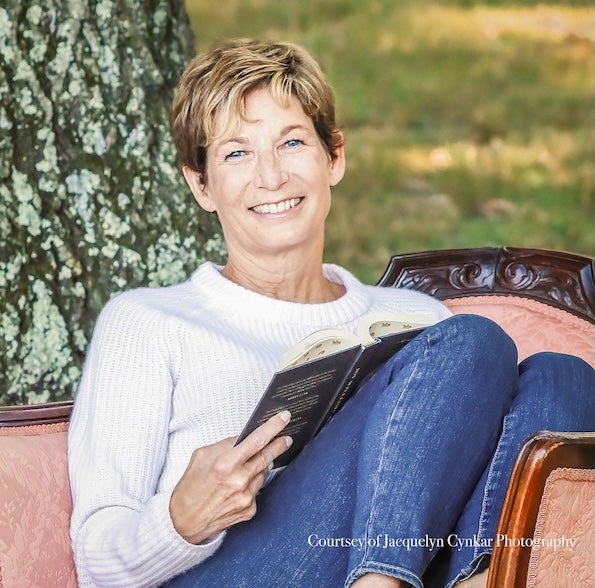
Author Lisa Slage Robinson shares lessons she learned from running that taught her about the long and winding road to publication.
I started running as an act of defiance. For years, I desperately wanted to be a cheerleader. I coveted, not a football player, but those short-pleated skirts, the sweater with the megaphone, the saddle shoes and, later, the white sneakers with the white ankle socks. I couldn’t do a split or a somersault but I was really good at smiling, so I figured I was in. When I didn’t make the cheerleading squad of six, I decided to join the boys’ track team.
I was tired of getting on the bus after school, going home to homework, a sad pint or two of chocolate ice cream and Luke and Laura on General Hospital. I wanted my own story. I wanted to be a part of something. Running didn’t require any skills. All I had to do was show up. Title IX opened the doors for me and others because there was no corresponding girls’ team. After a few weeks of cold rainy weather, icy March biting our lungs, I was the last girl standing, the only one willing to tough it out to see what April and May would bring.
During practice, we ran around a makeshift track, the circular asphalt driveway at the back of the building where the school buses lined up, complete with potholes and weeds growing through the cracks. Looking back, the guys probably thought of me as an unintimidating novelty, a little mascot. There was no hazing or abuse. Just a ton of brotherly encouragement and support. And our wonderful coach, Mr. Moore, made sure that I ran every meet, creating extra heats, if necessary, just for me. I always came in last.
In the face of all that failure, never having the thrill of victory but always the agony of defeat, some people wondered loudly, “Why don’t you just quit? “
Before the negative feedback loop and the naysayers took hold, a wonderful thing happened. I discovered that with practice, I grew strong. With more practice, I grew stronger still.
Years later, stepping back from practicing law to write speculative fiction was another act of defiance. The same voices wondered, How could I leave the certainty of a paycheck and the professional standing that took years to attain? How did I have the audacity to think I could be a fiction writer? I reasoned that I could write pretty sentences, so I figured I could write a novel. But just like a nice smile didn’t earn me a spot on the cheerleading squad, pretty sentences didn’t translate into a novel, or a novella or a short story.
I had to return to the lessons I’d learned as a runner.
I knew practice would make me stronger, but what did that look like?
Find a Team
For me it started with finding a team. I sought out writing groups and workshops. I pursued an MFA, after which I joined a new writing group of trusted advisors, whose work I admired, who pushed me with kindness but pushed me nonetheless, to work harder, to dig deeper to find the best word, the hidden meaning, to turn cliché into something new and maybe profound.
They passed on to me opportunities they thought would be a great fit. And they became my best cheerleaders, lifting me up when despair settled in, applauded the positive rejections and urged me on.
Stretch
Writing is essential, of course, but I had to learn how to stretch and strengthen those writing muscles. While pursuing an MFA is not essential, for me it was a lightning bolt triggering years of “aha” moments. Through my MFA program at Chatham University, I was introduced to new forms (flash fiction) and genres (food writing) and amazing authors who were previously unknown to me.
Because Chatham focuses on place-based narratives, I began to consider how place can deepen a narrative, create texture and tension and connective tissue, and how place can also become a character. In my linked short story collection, Esquire Ball, Stories from the Great Black Swamp, the region in Northwest Ohio, in and around Toledo, which was built on the ghost of a swamp, became the locus from which each story sprang and the inspiration by which the stories veered from realism into fabulism.
Crosstrain
The lessons I learned from my MFA program and the work I created were just a warm-up. The real workout had just begun. And crosstraining became essential.
For me, this took the form of good literary citizenship. Volunteering to read the slush pile for literary magazines, independent publishers and a literary agent became a new form of education. Reading hundreds of stories and manuscripts reinforced what I admired but also taught me valuable lessons in what didn’t work, recognizing the same issues in my own narratives.
Writing book reviews is another form of literary citizenship and a post-graduate education in literature. When I write a review, beyond summarizing it and giving it a thumbs up or thumbs down I will read the book at least three times, looking for themes and patterns and beautiful language. Then I read three or more other books in conversation with it, asking what broader truths come to light. Always in the back of my mind, I wonder, How does all this new insight relate to what I’m working on?
Diet
Consuming a regular diet of books, short stories, and lit mags is like carbo loading for the big race. They fuel your heart and mind. Read widely in many genres and forms. Read for challenge and read for joy. Read that book that will further enlighten the story you’re working on—even if it’s for only one sentence or a character trait.
In Esquire Ball, I wanted to revisit the time in the 1980s when China loaned giant pandas to the Toledo Zoo. In “Heat Wave,” in the summer of 1988, a young woman, Sarah, emotionally estranged from her husband, becomes enthralled with a panda keeper from China. I read a lot of books about bamboo forests and panda estrus and panda conservation and the World Wildlife Fund.
But my favorite was The Lady and the Panda by Vicki Croke, which follows the adventures of Ruth Harkness, a 1930s fashion designer and socialite who travels to Tibet and brings back to the States the first live Giant Panda Bear, a baby panda who adorably accompanies her on the New York City social circuit riding in taxis on the way to cocktail parties. I wasn’t able to incorporate Ruth Harkness’s story, but I did infuse Sarah with Ruth’s longing for adventure, and her desire to live beyond the cage of societal constraints.
Put in the Miles
Do the work but enjoy yourself along the way.
Eventually, I found myself on girls’ teams, track and cross-country, lettering in both. I continued to run after high school because I loved the way it made me feel. I worked my way up to 10Ks and half-marathons and one full marathon.
As a debut author at 64, I’ve racked up quite a few miles on my path to publication. It has been a marathon, not a sprint. Endurance, rather than speed, helped me navigate the bursts of energy, the joys of inspiration followed by the setbacks, the long fallow periods of mindless jotting or not jotting at all, the fabulous detours and distractions along the way.
Esquire Ball took 10 years from first sentence to publication. It takes as long as it takes. Enjoy the journey.
Check out Lisa Slage Robinson's Esquire Ball here:
(WD uses affiliate links)