Silver Linings Playbook: Publishing Past a Certain Age
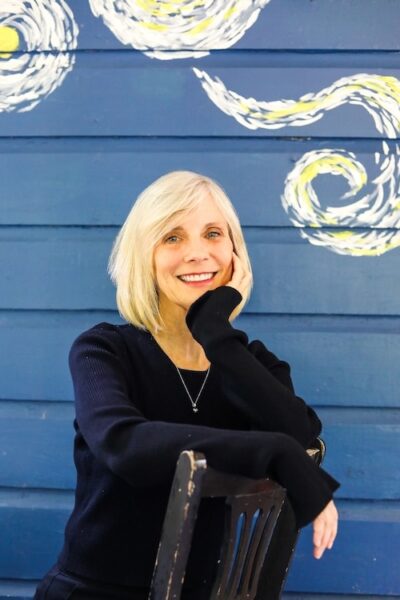
Author Amy Pence shares her “silver linings playbook” to publishing past a certain age and how being a late-bloomer can be a plus.
As a mere 55-year-old, I paneled with Naomi J. Williams, author of Landfalls, on the topic “Silver Linings: Women Publishing Over 50.” Her hot tip? Once she signed her book deal with FS&G, she decided to go gray. She would wear her age proudly and not confuse readers with conflicting hair shades. Eight years later, having been brunette (natural), blonde, and then magenta-red (very not natural), I too welcomed in the silver tresses of my novelist age when I signed a contract for my first novel.
For literary guidance, I often thought of Frank McCourt, a high school teacher in the New York City schools and 66 when he published Angela’s Ashes, winner of the Pulitzer Prize for Nonfiction in 1997. Bonnie Garmus was 65, like me, when she published a 2022 bestseller. Her first novel was rejected 98 times, but she stayed the course and wrote a new one—Lessons in Chemistry.
Like McCourt, I’m a retired educator and like Garmus, I found myself in the cul-de-sac of a novel I had worked on for 10 years. Looking back, that was all practice because once I let it go, I wrote and published my second within five years.
The late blooming writers I know have found that to embrace age is to welcome the career that has finally come home.
Also a retired English teacher, debut novelist Laura Dickerman wrote Hot Desk at 60 and published it two years later. Dickerman saw her age as a selling point: “When we marketed the book, I wanted to lean into the idea that it’s exciting because I’m old—I made much of the fact that Laura Ingalls Wilder published the first Little House on the Prairie book when she was 65.”
Yet, as mature authors, we are on our own unique timelines. Here’s what I’ve learned.
Embrace Your Pace
If nothing else, age teaches us to trust the process. Robert Gwaltney, author of The Cicada Tree and this year’s Sing Down the Moon, began writing seriously in 2003 and published his first novel in 2022 at 51. A vice president of a non-profit by day, Gwaltney jokes, “The journey wasn’t quick, but it was honest.” Shaped by years of living as much as writing, Gwaltney says he no longer chases trends, but trusts the story, writing from a deep well of experience. Such confidence can defy initial expectations.
Dickerman initially set out to write a rom-com, but something happened while writing about a present-day office romance between two young editors. “I found myself expanding a dual timeline that traveled back to the early 80s and focused on the older characters—not surprisingly, women in their mid-60s. Being my age was essential to writing these sections, and expanded the book’s reach.”
The gift of perspective also helped me to lengthen my character’s timeline. A 12-year-old in 1973 when she finds an intelligent and magical slime mold in her backyard, my central character ages to 60, rediscovering some of the wisdom she had attained as a girl. There’s no way I could have written my book even 10 years ago.
Stay True to Who You've Become
Both my fiction friends agree that writing and publishing their novels at this stage comes from a more grounded space. Gwaltney says, "There’s a deeper well to draw from—more life, more patience, more clarity about what matters. You’re less concerned with proving something and more committed to telling the truth. That kind of perspective can’t be rushed.”
I know I’m not alone in having wasted time chasing the fantasy of the writer’s life. Letting go of those illusions grants peace and permission.
Dickerman says after the many years when she “wanted to write, didn’t write, felt guilty about not writing, then finally wrote,” she is now unapologetic about being a crone. “Age has given me power and wisdom, and I don’t mind taking up space. I’m comfortable speaking my mind, and I’m more interested than ever in what other women have to say.”
Value Your Readers
Rather than measuring themselves against the success of other writers, maturity grants writers the wisdom to take into account the people that really matter: readers. Gwaltney says publishing now feels less like arrival and “more like alignment.”
Dickerman also says that engaging with readers at this stage in her life is “joyful and enriching.” One of her most rewarding encounters was with a bookseller who told her that she took Hot Desk on vacation and she, her mother, and her daughter all read and loved it.
Gwaltney relishes the meaningful moments that his writing inspires: “One woman told me that my book felt like something she’d lived but never had words for. We stood there talking—about memory, family, and the weight we carry from both. I remember thinking that I couldn’t have written this novel—or received that moment—the same way at thirty.”
Pave the Way
My fiction friends and I agree that bias or ageism has been minimal; instead, we’ve found that publishers and publicists find mature writers inspirational. Publishing in the later years models to younger writers that there is time. There’s time for career-building and/or child-raising and time to develop a solid identity before writing that publishable book. Having recently met the young people behind the scenes at my press at a writer’s conference, I was overjoyed that they were the true champions for my book’s publication.
Dickerman shares that pre-publication, it was the older woman on her marketing team that was unsure whether to highlight her age, especially since the central romance of the book was between characters in their 20s. “But my dewy-faced young publicist wanted my age front and center,” Dickerman says, “and found the story of my long trip to publishing aspirational.”
Final hot tip: Trust your youngers and take pride in your silver writing years.
Check out Amy Pence's Yellow here:
(WD uses affiliate links)