I Let Go of the Version of Publishing I Was Supposed to Want; an ADHD Diagnosis Helped
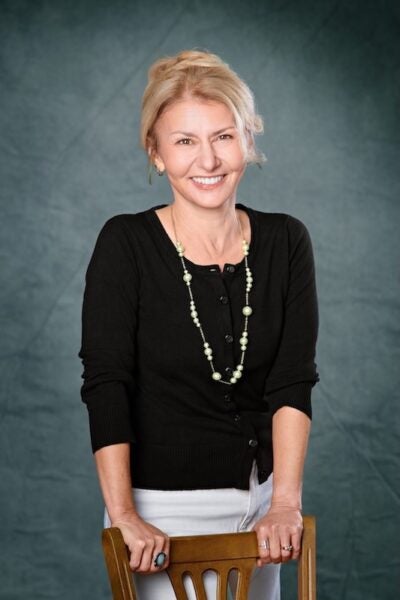
Author Irena Smith reveals how hybrid publishing and an ADHD diagnosis combined to help her find a publishing route that made sense for her.
It took me 20 years to write my first book and one year to write my second. I attribute my dramatic increase in productivity to two things: Ritalin and a hybrid publisher.
It’s not precisely as simple as that, but those are the central plot points in my “How I Became a Published Author” story. Before I was an author, I was a private college admissions counselor, a job I excelled at because I was good with teenagers and good with deadlines and good at picking out the sparkling thread of a story, like a magpie. And like a magpie, I was also storing away bits and pieces of my own writing, haphazardly, while working full time and raising three children.
Those bits and pieces became a book after a friend introduced me to another friend, who happened to be a literary agent, and I may or may not have misrepresented the assortment of bits and pieces in my Google drive as a “completed manuscript.” The agent asked to see the manuscript, I asked whether I could have the weekend to “add some finishing touches,” and then I put my head down and wrote and revised for 60 hours straight, with short breaks for coffee and sleep and an occasional bowl of dry cereal, which I could eat with one hand while continuing to type with the other. I ignored my husband and my 25-year-old son and my 20-year-old daughter who were living with us at the time. The more I wrote and revised and moved around passages and sentences, the clearer the through line became. When I showed what I had written to my husband, he looked at me and said, “Huh. You wrote a book.”
The agent emailed me back two weeks later. Her email said, “I love your memoir.” She wanted to represent me. She thought the book might go to auction.
It was everything I dreamed of and more. My agent (now I could call her my agent instead of the agent) also happened to be a talented editor, and she helped me refine what I had written, to find a place for each fragment. We were giddy. Then the rejections started coming. Seventy-two in all over a period of six months, after which I decided to go with a hybrid press and my agent stopped being my agent. A year later, I was diagnosed with ADHD.
ADHD is a retroactive diagnosis. There’s no blood test or brain scan. The diagnosis is based on a patient’s history, on identifying patterns of behavior that coalesce into units of meaning. In that, it’s not unlike a memoir. You look back over your life and realize, Ah, that’s why I’m like this.
To be diagnosed with ADHD, an adult patient must meet five or more criteria from one or both of two diagnostic subcategories—inattentive and hyperactive/impulsive. The criteria include making careless mistakes, inattention to details, problems with organization, losing necessary items, distractibility in daily activities, fidgeting, blurting or interrupting, and excessive talking. I met 12 of them. I probably meet more on a bad day.
My diagnosis explained a lot. It explained why I sat on bits and pieces of my book for 20 years and then, given a high-stakes deadline, put those pieces together in one weekend. It explained why I finished my doctoral dissertation in three breathless, sleepless months after procrastinating for almost a year. (I was pregnant for most of that year, but decided I would wait until after the baby was born to start writing because everyone knew babies slept 20 hours a day and I’d have lots of free time after giving birth.) It explained why I was voted Most Likely to Talk to Anyone or Anything about Anyone or Anything at the end of my senior year of high school. It explained the impulsivity. It explained my chronically missing wallet, keys, phone, tote bag, coffee mug (the coffee mug was usually in the microwave, stone cold after a forgotten third reheating). It explained why the refrigerator was the site of ongoing skirmishes between my husband, who has whatever the opposite of ADHD is, and me, a person who shoves perishables haphazardly onto shelves and into drawers and doesn’t mind hunting high and low for parsley (the parsley is usually languishing at the very bottom of the crisper drawer, limp and forgotten like a Victorian spinster in a remote country parsonage).
I am not an organized person in my daily life. I don’t do well with waiting. I don’t do well with open-ended deadlines and lack of structure. I definitely don’t do well with rejection. No one loves being rejected, but I experience rejection as being stabbed in the heart with a rusty nail. Being rejected makes me feel utterly destroyed. Worthless. Hollow. After my diagnosis, I learned that there was a term for this: rejection-sensitive dysphoria, which is common in people with ADHD. My neurological wiring was manifestly unsuited for traditional publishing, which involves waiting and lack of structure and open-ended deadlines and endless rejection.
But I didn’t know any of that at the time. I had not yet been diagnosed with ADHD. I had not yet been prescribed Ritalin. I had not yet signed with a hybrid publisher.
The Ritalin helped—a lot—but signing with a hybrid publisher changed my life.
Hybrid publishing is not for everyone. I didn’t think it was for me, even as rejection after rejection from traditional publishers landed in my inbox. It was expensive. It was self-indulgent. It was embarrassing. As a college counselor, I told my students that prestige didn’t matter, that they could get a good education anywhere, even a community college, but when it came time to follow my own advice, I hated the idea of settling for the publishing equivalent of community college, and I hated myself for yearning for the publishing equivalent of the Ivy Leagues—an auction, a six-figure book deal, a national book tour.
I signed with a hybrid publisher after I decided that I wasn’t getting any younger, that I wanted my book out in the world more than I wanted prestige, that I would rather walk through an open door than bang on doors that remained stubbornly closed. I still wasn’t sure that a hybrid publisher was what I wanted, but I knew what I didn’t want: to spend the rest of my life steeped in resentment and regret. I also knew I didn’t want to self-publish, because I wanted my book to have traditional distribution and because self-publishing involved a level of initiative and organization I knew I lacked.
As soon as I signed the contract, I was introduced to my project manager, who emailed me an editorial schedule with non-negotiable deadlines. Deadlines! Deadlines are my love language. Give me a deadline and I become a ninja—laser-focused and lethally efficient.
My first book made enough money to break even with the cost of hybrid publishing. It gave me a sense of structure and legitimacy. It spurred me to start one Substack and then a second, because it turns out that telling people you’ll be publishing every week is its own kind of deadline. It connected me to other writers and to readers I would have never met otherwise. Most of all, it helped me understand how to work with ADHD rather than against it.
I wrote my second book in a year from start to finish because as soon as I had a vague idea of what I wanted to write I emailed my publisher at the hybrid press (yes, I now refer to her as my publisher) and said I wanted to get on her roster with my second book. She emailed back asking for the first 50 pages so she could give me a thumbs-up or send me back for further revisions. I didn’t have the first 50 pages, just an idea; I wanted to write about a three-day road trip with my mother and my daughter to California’s Central Coast in the midst of a violent storm, but I also wanted to weave in other stories—our family history of evacuations and migrations, binge-watching the second season of The White Lotus, Homer’s Odyssey, California history and internet memes and Russian proverbs. In many ways, the book reflects how my mind works—non-linear, associative, peripatetic.
An idea and a deadline. What more does a person need? I hunched over my computer and wrote for a week. After I hit “send,” my publisher emailed me to say she was green-lighting the book. She wrote that my approach was unusual—very different from typical memoir—but that I had made it work. Then came another editorial schedule and another set of non-negotiable deadlines.
Had I still been operating in the world of traditional publishing, I (or my agent) would have fretted that the book was too weird and thus not sellable. We might have toned down what we perceived as weirdness. We would have waited weeks or maybe months for a response; we would have agonized about the silences; we would have despaired at the rejections. In hybrid publishing, you get a “yes” or a “no,” and you get it quickly; you front your own risk and decide whether to move forward or stay put. So many good things happened in the wake of publishing my first book—the money returning to my bank account, sure, but also the validation, the sense of community, the unexpected connections and opportunities—that not taking the risk a second time seemed stupid.
As a college admissions counselor, I encouraged my students to look past prestige. I told them to think about the right fit rather than name recognition; I told them that the name of their alma mater was not a reflection of their worth. But as a debut author who struggled to break into traditional publishing, I found that advice impossible to swallow. The proverbial straw that broke the camel’s back came when an editor at a small press expressed interest in my first book and asked for revisions (which I delivered at record speed, because deadlines). Then the editor went radio silent. My agent nudged her, then nudged her again. Almost three months after we sent the revisions she requested, she said she had been too busy to read them and would have to pass. My book, she said, was not the right fit for her at this time.
I had been giving my students solid advice after all. The point of applying to college is not to get into Harvard; it’s to get a good education. The point of writing is not to get a book deal; it’s to get words out into the world. To find connection and momentum. To be read.
Check out Irena Smith's Troika here:
(WD uses affiliate links)