Forewarned Is Forearmed: A Foreword on the Things Publishers Don’t Tell You
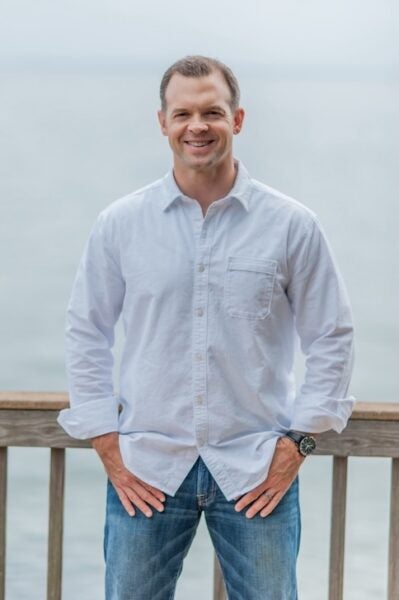
Author Matthew Betley shares five things publishers don’t tell you when you’re starting your career as a published author.
I still remember the exhilaration when my first agent called me in May of 2014 and told me Emily Bestler Books at Atria of Simon & Schuster wanted my debut Logan West thriller, Overwatch, in a two-book deal for what was a significant amount of money. I literally couldn’t sleep that night. I had visions of “NYT Bestselling Author” next to my name, the sound of dollar bills dancing in my head, books being made into movies, all the life of a successful author. I was off to the thriller races with a “kingmaker” editor, an unstoppable force of literary momentum carrying me forward...or so I thought.
For a recovering alcoholic (17 years last month), there’s an initial period of sobriety referred to as the pink cloud. It’s the euphoric, optimistic "honeymoon phase" in early recovery where individuals feel bliss, hope, and confidence, viewing everything with rose-colored glasses. I didn’t know it at the time, but that’s where I was between the time I signed my first contract to when Overwatch was published.
My first four books did well by most standards, and Overwatch was nominated for the Barry Award for Best Thriller of 2016, but I didn’t make the NYT bestsellers list. Breaking the top 100 of Amazon, while significant, is not the same thing. My second book, Oath of Honor, also did well, but it didn’t sell as many copies as Overwatch. Books three and four of the Logan West series followed the same trend, and before I knew it, I found myself in the position no author wants to find his or herself: writing a standalone to “reboot” a writing career. Almost every writer I’ve ever spoken to, save the lucky few who break out into the stratosphere overnight (it happens, but it’s as rare as finding the Florentine Diamond buried in your backyard), end up doing it. And so I embarked on the next phase of my career like the Endurance into Antarctica.
My first standalone thriller, The Neighborhood, from Blackstone Publishing, dropped in 2022. It did well, and I even wrote the screenplay adaptation (more on that later), which has had two different directors and producers attached at different times. My second standalone, The Council, comes out this month, also from Blackstone. Personally, as the writer, it’s the best thing I’ve written, and I hope readers love reading it as much I loved writing it. It’s not for the faint of heart, as it deals with themes of immense grief, loss, and redemption, but it does feel relatable, or so early reviewers have generously said.
My point is that I’m fortunate enough that I’m still writing and that a publisher is still paying me to do something I love doing: to take you on an intense roller coaster ride from cover to cover, often with unique and large-scale action sequences, a hallmark of my thrillers. But this is a brutal business, full of pitfalls, false promises, and plenty of people who will tell you what they think you want to hear.
The truth is that if you’re asked to the Publishing Dance, there’s a good chance you’ll end up starting frustrated, dancing awkwardly, slowly getting angry because your date’s hanging with friends instead of you, go through denial, and ultimately walk out alone into the publishing universe. My hope is that if you’re lucky enough to get published, you’ll avoid the pitfalls of teenage love rituals. As a result, I’ve learned the following lessons the hard way, and I’m happy to still be standing... or sitting as I type away furiously at my laptop.
Lesson One: Sales Are All That Matter
I don’t care if your publisher tells you you’re the second coming of Stephen King, J.K. Rowling, and Tom Clancy combined. All that matters is sales.
It doesn’t matter if you’ve written the greatest literary novel of all time that make Don Quixote and Anna Karenina look like stories scribbled on Greek diner napkins. Your book could receive glowing reviews from the New York Times to your local newspaper. Your book could receive a perfect 5-star rating on Goodreads (no one does; that might actually be impressive; readers are hard on Goodreads). But if your book doesn’t sell? None of it—and I mean literally none of it—matters.
If your publisher doesn’t earn back the advance they paid you, your years as a traditionally published author are numbered, likely in the single digits. At my debut Thriller Fest in 2016, Steve Berry told a group of 23 debut authors, myself included—and I’ll never forget this, as well as his methodical approach to editing, which is the best method I still use today—“The reality is that in less than three years, no more than one or two of you will still be publishing.”
He wasn’t joking. Out of that group from 2016, I might be the only one. It’s a hard business, which leads me to my second lesson.
Lesson Two: Publishing Is a Business; Treat It as Such
It’s your name on the cover. As result, it’s your business. You might have an editor, a literary agent, a film agent, a publicist, and a publisher with a marketing team, but it’s still your business. You are the one ultimately responsible for it.
The Marine in me takes extreme ownership over everything I do, and I’ve been involved with every decision that’s been made about every book, including cover development. But that comes with responsibility. I’ve fired multiple agents, not because I didn’t like them, but because I felt like I needed to go in a different direction.
Don’t be afraid to be in charge of your career because at the end of the day, you’re just one of many that your agents and publisher carry, but you only have one name and one career. It’s all on you. No pressure.
Lesson Three: People in This Business Are Not Your Friends
I’m not saying you can’t be friends with people in this business (and I’m not talking about your peers or other writers). I’ve met plenty of people in publishing and in Hollywood that I’ve had very personal conversations with, that I’d almost consider my friends. But then I realized that this is a business, and I have something they hopefully want, which is why they’re talking to me, and vice versa.
That’s not cynicism. It’s reality. Things happen in publishing. Sometimes books don’t sell well, and editors have to make hard decisions based on Lesson One: Sales Are All That Matter. When that happens, you have to remind yourself that it’s not personal; it’s just Lesson Two: Publishing Is A Business.
The best way I’ve found to think of people in publishing and in Hollywood is as co-workers. You can have great relationships with them. You can go out for drinks, hang out at lunch, have a blast. But at the end of the day, you’re all working for the same goal—to sell books, not be friends. I’m not saying you can’t do it, but if you stay in the business long enough, they’ll come and go, but real friends won’t.
Lesson Four: It’s a Marathon, Not a Sprint
I loathe that saying, but unless you’re one of the .001% of overnight successes, it’s going to take time to build your career. The more books you write (at the right advance amounts), the longer the tail your backlist will have. The longer the backlist, the longer the career. The goal is to stay in the game as long as possible. You can’t win if you’re not playing.
Lesson Five: Learn to Write Screenplays
Your craft is everything, and you should be constantly finetuning it wherever and whenever you can. One of the smartest things I did to improve my craft was learn to write screenplays during the pandemic lockdown. I’d been told for years I had a “visual style” of writing, and it suited the screenplay format. I read a few articles, talked to a few friends in Hollywood, and purchased Final Draft.
I’ve since written four full screenplays and a TV pilot, and here’s why that matters: A screenplay is usually 110 pages or less, with double spacing and narrower fields. You are literally forced to minimize your prose. It’s the ultimate test of less is more. Even more critical is that every line of dialogue has to have impact. Dialogue should be meaningful, authentic, and pithy. Write dialogue the way people talk, not the way you think they talk. Writing screenplays hones that skill.
People don’t speak in long soliloquys from a Shakespearean play. We speak grammatically incorrectly and in fragment sentences. The more realistic your dialogue is, the better. The bonus is that if you write a book and then have a screenplay adaptation of it, you might get to sell both to Hollywood, and then you’re in the real money.
At the end of the day, your career is about you, and I wish you the best of luck in this brutal business. It’s a jungle out there, but if you have the skill, resolution, and perseverance, it can be a rewarding walk through the dense foliage. Semper Fidelis.
Check out Matthew Betley's The Council here:
(WD uses affiliate links)