A Conversation Between Two InstaPoets: Lyndsay Rush and Maria Giesbrecht
InstaPoets Lyndsay Rush and Maria Giesbrecht have a conversation about their methods on and memories of sharing poetry on Instagram and more.
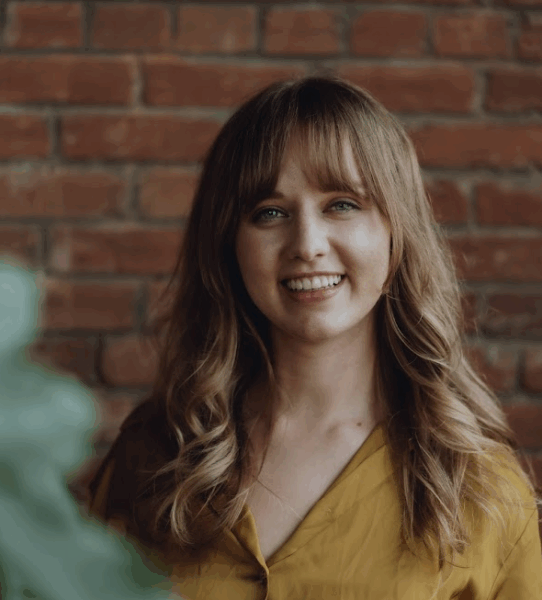
In the wake of Lyndsay Rush’s USA Today bestselling book A Bit Much (St. Martin’s Griffin, 2024) and the upcoming release of Maria Giesbrecht’s A Little Feral (Write Bloody Publishing, May 2026), these two poets are redefining what it means to be a “platform artist.”
Here, they discuss the transition from digital virality to traditional publishing, the necessity of “early-career delusion,” and why the algorithm will always be an anxious-avoidant partner to the modern writer.
Maria Giesbrecht: Hi Lyndsay! Let’s start with the elephant in the room. How do you feel about the controversial term “Instapoet”?
Lyndsay Rush: I feel about “Instapoet” the way I feel when a parenting guru online calls me “Mama.” As in, “You’ve got this, Mama!” It's like I know it’s technically correct, but I’ll never use it to describe myself.
MG: That is such a perfect comparison—it’s that weird mix of being seen but also slightly patronized. We both emerged from the digital ecosystem of Instagram to find a home in traditional publishing—a transition that feels a bit like a sea creature growing lungs. When you were still navigating that digital-only space, who was the “gateway” poet that bridged the gap for you?
LR: I want to say Kate Baer, although what I admire about her is that she doesn’t seem to play the IG “game.” But she was probably how I realized that poetry could be something other than what I had in my mind from high school classes—stuffy or unapproachable. I was like, Wait, THIS counts? We’re allowed to write this way and call it poetry? And then of course, being me, I added my own, deranged sensibility to the form and quickly fell in love. What about you?
MG: I found Lauren Bowman, Joy Sullivan, and Yrsa Daley-Ward so incredibly inspiring. I’m struck by how these women gave us “permission” to bypass the traditional gatekeepers of the publishing world. I think you’ve also done that by carving out a niche for humorous poetry and giving others who look up to you permission to do the same. Do you remember the moment you decided you were a poet and called yourself one?
LR: It took me a while, to be honest. It was like a bra that didn’t quite fit. To your point, though, the more I accepted that I could do this—and was in fact doing this!—on my own terms, I was able to lean into it. Eventually, I found myself thinking everything was a poem: the way my son hiccupped, the way the squirrel smelled that flower, the angle of the sun through my kitchen, the funny news headline. I realized that if I was now looking at the world through poetry-colored glasses, then yes, I was a poet.
MG: Ahhh, I remember the first time I read Mary Oliver’s quote, “Pay attention. Be astonished. Tell about it,” and how it really did make all the difference. Besides “She’s A Bit Much,” were there any other poems that were fundamental in you gaining traction online?
LR: The very first “longline” (or as I call, listicle) poem that did numbers was “It’s Called Maximalism, Babe” and that was a few months before I wrote and shared “She’s a Bit Much.” I learned right away that that style of poem performed really well with my audience, especially if it focused on the topic of self-expression, joy, and subverting societal expectations for women. That poem truly changed my life, though, because that’s when I started getting DMs from literary agents and publishers. Did you have the same experience with A Little Feral?
Check out Maria Giesbrecht's A Little Feral here:
(WD uses affiliate links)
MG: I had two poems, “You’ve got green pennies for eyes” and “I climb into my bathtub the same way I fell in love with you” that went truly viral, and I gained a large readership almost overnight from it. I did query my agent traditionally; however, we had already DM’d on Instagram, so take that with a grain of salt! I don’t recommend DMing literary agents, for what it’s worth. But maybe you can get away with a story reaction [laughs]. Because those poems went viral a few years ago, A Little Feral doesn’t actually include either of them! Perhaps they’ll slide into my next one.
I’m curious, after publishing your debut, A Bit Much with St. Martin’s Griffin and experiencing the level of success you did, has it felt hard to follow? (Asking for a friend!)
LR: The post-pub hangover is REAL. It’s so strange to work in secret on something for like years and then have it be this big bright firework and then you’re sitting there like…hello? What just happened? But I feel so lucky that I write poetry books and not novels because I don’t have to reinvent myself or start from scratch. I never stopped writing new stuff (especially because there’s so much time in between turning in the manuscript and the book actually coming out), so it has just felt like a nice flow and I’m still so excited to share more, write more. The next book (shh!!!) basically wrote itself.
MG: All I heard was “next book!” Okay, let’s rewind a little. We’ve both been sharing our work online for a few years. Let’s reminisce. Returning to “analog” has been a trendy discussion this year. What are you nostalgic for in the Instagram poetry world? I remember the days when we were doing “afters” of each other's poems on a weekly basis, where “which is to say” was a go-to poetic line. The Instagram poetry community truly felt like a magical little secret we stumbled into on the internet. What do you miss about Instagram?
LR: Not to sound like a madwoman, but I miss when Instagram showed our content to our followers. Imagine that! LOL. I’m also misty eyed about the pre-Reels era, when that pressure didn’t exist and I could just post my static poems without a care in the world. You remember those days?
MG: There were a few golden years! We made hay while the sun shone [laughs]. It’s tougher now—posting poems on IG involves some level of delulu. Mixed with loads of consistency. What’s your magic ratio of delulu and hard work?
LR: Ah, the Instagram Artist Mullet: Delusion in the front, dedication in the back. It feels like the famous Ira Glass quote about taste and ambition but with hope and effort. You can’t share art online without a lot of delusion in the beginning, but you won’t sustain the craft without a lot of effort. I have always been very dogged, however, about ensuring poetry never feels “hard.” I think since poetry was a surprise discovery amidst my other writing career, I have always treated it like, well, a treat. I was never trying to make it my sole focus, therefore I prioritized the fun and exploratory element of it.
MG: I feel lucky I had that early delusion as well. I knew virtually nothing about craft. But I was writing every day. And somehow that worked wonders for improving my craft. Perhaps more than an institutional program could ever have provided. When you’re “business in the back,” what does your editing process look like? How do you ensure the work has enough “teeth” to outlast a scroll?
LR: I am a student of the Anne Lamott school of “shitty first drafts.” So a typical process for me is scribbling down imperfect poem ideas or lines and revisiting later. Two benchmarks for me on a poem getting closer to completion are title and punchline. I love a plot twist ending or surprise opening or the inverse! So those are must-haves for me on a piece before sharing. Usually when I’m revisiting a draft I’m reading it out loud and paying attention to rhythm and word choice and making sure nothing feels too expected or ubiquitous unless it’s intentionally so for a satirical element or whatever. I am also a stickler for originality so I will also run it through the lens of: Has someone else said exactly this before? Am I adding anything to the conversation? What, exactly, isn’t POV here? And, of course, can I make this funnier?
MG: You mentioned making sure nothing feels too "ubiquitous," which is such a challenge when you’re writing for a platform that literally runs on trends. How much does that "performance" aspect weigh on you? Are you thinking about the "shareability" of a poem while you’re still in that "shitty first draft" phase?
LR: I have to constantly remind myself that the algorithm is a f*ckboi and therefore does not determine the value of my work nor does it accurately reflect what my audience actually likes (since, ya know, often they don’t even get shown the content LOL/SOS). However, the reality of social media is that it is a great marketing tool, so I had to take it more seriously once I decided to publish the book. When I’m in book promo mode, I typically strategize on sharing bangers, as opposed to experimental stuff. At the end of the day I’ve made peace with the fact that you cannot predict what will perform well online these days. And, in a way, that can be a type of relief and release.
MG: I always say it’s like being in an anxious-avoidant relationship–the more you chase, the further it runs! I’m currently in book promo mode for A Little Feral. I’m sharing some of my old favorites, posting some new Reels (fingers crossed!), and trying to have the most fun along the way. As authors, we are often encouraged to brand ourselves by our publishers, agents, and publicists. How much do you think about this, if at all?
LR: I thought a lot about it when I started my account. Only because I wanted people to know right away what to expect. I knew I wanted a handle, bio, and profile photo that communicated fun and ridiculousness. That’s why I went with the handle Mary Oliver’s Drunk Cousin. I often tell aspiring artists that if they are starting a dedicated IG account for their work, to give it spice and specificity so that your target audience has something to sink their teeth into. Forget @firstnamelastnamepoetry, give me some flavor! Tell me what I’m in for with your content! I think because I drew such a line in the sand when I began, and because my “brand” is more about vibes—maximalism, absurdity, humor, joy, and hope—than a topical niche (all of which is very true to my IRL value system), the branding of my work now feels nearly effortless.
MG: One of the beautiful things about sharing online is the immediate connections you can make with your reader, that you likely wouldn’t be able to in a literary magazine. It was what gave me momentum early on in my writing journey to keep going. We’re often told that seeking external validation is a creative “sin,” but for me, those early Instagram comments were the primary fuel for my momentum; I’m not sure A Little Feral would exist without that communal encouragement. Of course, the comments are not always positive. Do you read comments? For trolls, do you block and delete, ignore, or respond?
LR: I honestly don’t have trolls [knocks on wood]. I was thinking about this the other day and it may be because it’s difficult to troll someone who is constantly writing about joy and hope and doing it in a completely nutty way. However, I’ve of course gotten a few rude comments or DMs and if they’re innocuous, I write back something silly or sarcastic, but if they are cruel or hateful I ignore > delete > block. I do read and reply to as many comments as I can. My followers are so freaking funny and smart, and I’ve had many days turned around entirely by their shared joy.
MG: There is something radical about finding the exact intersection where your private joy meets a stranger’s need; maybe that resonance is the only “algorithm” that actually matters?! What is your parting shot for the poet standing at the edge of the "Post" button, feeling that mix of terror and "delulu"?
LR: I would tell them to endeavor to find pleasure in the simple sharing and honing of their voice long before the external validation comes…or in case it doesn’t! And probably also this: The stuff you believe to be the least likeable/lovable is probably what the world needs from you most.
MG: That is the perfect note to end on—that the very thing we’re most afraid to show is usually the thing that builds the bridge to everyone else. I’ll cheers to that.
Check out Lyndsay Rush's A Bit Much here: