Idris Goodwin: The Way You Tell a Story Should Connect to What the Story Is About
In this interview, Idris Goodwin pulls from a palette of emotions and memories about navigating school, creativity, and more.
Idris Goodwin is an award-winning neurodivergent storyteller for multiple generations and the author of picture books, poetry, plays and young adult fiction, as well as a dedicated mentor to emerging writers. Goodwin serves as Associate Professor of Dramatic Writing at Arizona State University.
Your book uses rap, rhythm, and verse to express Pernell’s inner life. What led you to tell the story in this style?
My MFA in writing is from the School of the Art Institute of Chicago, which is a very serious visual and conceptual art school. One of the things they really stress there is the marriage between form and content. The way you tell a story should connect to what the story is about.
When I conceived an ADHD-addled narrator whose coping strategy is freestyle, extemporaneous rhyme, the form just clicked. Writing in verse, leaning into the rhythmic, musical, improvisational nature of free verse, mirrors the way an ADHD-oriented brain can move.
The protagonist, Pernell, has a likable and relatable personality. Is his character based on an actual person? Perhaps someone who inspired you to share his story?
The story itself isn’t autobiographical, but it definitely draws from my lived experience. I pulled from a palette of emotions and memories from navigating school, creativity, and identity as a young person. The voice of the book came pretty quickly once I started writing.
In Chapter 8, when Pernell refuses to shrink after the classroom moment with Ms. Harding, was that meant to be a turning point?
I tend to think about character development through choices. In most stories we only spend a limited amount of time with a character, one big turning point in their life. For example, we only spend one day off with Ferris Bueller. It’s through the choices they make, including the choice not to act, that we really understand who they are.
That moment for Pernell was definitely meant to be defining. The story would be much simpler if it were just about him discovering his voice in the freestyle cypher and everything magically working out. Instead, the deeper question is: Once you find the thing that empowers you—what do you do with it? What are the limits of that power, and what responsibilities come with it?
The audiobook feels very conversational and performative. Have you considered expanding this for stage or screen?
While writing, I was constantly imagining myself performing the words, saying them out loud in front of an audience. So the language naturally developed that spoken, rhythmic feel. Because of that, recording the audiobook felt like a pretty natural extension of the writing process.
More recently, I’ve also been gently experimenting with the material in performance settings. Through an ongoing collaboration with Western Washington University’s theatre program, we’ve explored King of the Neuro Verse as a multi-voice performance piece for educational spaces. The idea is to move beyond a traditional author reading and invite student performers, readers, and faculty into the experience, making it more participatory and conversational.
In your role as Associate Professor of Dramatic Writing at Arizona State University, what advice do you have for aspiring writers?
There’s no single path for every writer. What I consistently encourage my students to do is learn how to write like themselves. That requires a writer to experiment with different approaches and styles, to emulate and steal, to be generous and collaborative, brave and brazen in order to discover what actually feels authentic to your voice.
I also remind emerging writers that their lived experience is one of their greatest resources. One’s perspective on the world, that’s the well to draw from. Craft can absolutely be taught, but one’s point of view on the world is ultimately what makes the writing meaningful.
Check out Goodwin's King of the Neuro Verse here:
(WD uses affiliate links)
____________________________________________________
If you’d like to meet Goodwin, he will be a featured speaker at the Arizona Author Book Festival in Phoenix, May 3, 2026. The free community event will include author talks, book signings, children’s story time, food, live music, giveaways and more. The mission of the festival is to spotlight local authors, champion literacy, and raise awareness for autism and neurodiversity; 100 percent of sponsorships and vendor fees support SEEDs for Autism, a nonprofit organization that provides education, social skills, and vocational training for teens and adults on the spectrum.
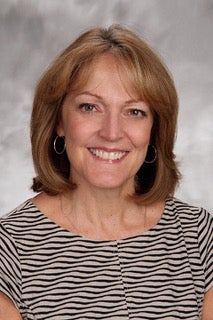
Leslie Cox writes personal essay and memoir, having published in: “Beyond Boundaries: Tales of Transcendence” Phoenix Oasis Press; Pure Slush Anthology: “Love, Lifespan;” The Silent World in Her Vase; Ariel Publishing; Women on Writing; Humans of the World; Lady Unemployed; and HCPro (trade articles and guidebook for health care professionals). Find Leslie at www.lesliesvoice.com.