

Creating the Most Dangerous Character in the Room (FightWrite™)
This month, trained fighter and author Carla Hoch breaks down what makes a character truly dangerous and helps us build our own dangerous characters.
What makes a character scary? Why does the circling shark make the men onboard the Orca tremble? Why does the hound roaming Dartmoor warrant a call to Sherlock Holmes? Why does a writer’s number one fan fill every cockadoodie reader with dread? The answer is simple. Each of these characters poses a physical threat. Why do they pose that threat? The answer to that isn’t quite so plain. In today’s post with FightWrite® on the WD blog, we are going to look at what makes a character dangerous, the framework behind judging the credibility of a threat, and how we can create characters capable of violence.
The Most Dangerous Quality
I start many of my fight writing classes with a creative exercise. I give the writers 30 seconds to create a dangerous character. Before I start the timer, I tell them that they can only give that character one quality to make them dangerous.
After the time has ended, I ask the students to share the one dangerous quality their character possesses. The top four I usually hear are strength, skilled training, intelligence, and magical ability. The last is pretty darn solid, you have to admit. You would think that if a character has supernatural abilities, that covers all the bases for being dangerous.
A Fish, A Brat, and a Nut
Unfortunately, you’d think wrong. Without one quality in particular, no amount of training, strength, genius, or magical power is worth a hill of beans. Without this one quality the shark from Jaws, Rodger Baskerville II, from the Hound of the Baskervilles, and Annie Wilkes from Misery aren’t threatening characters at all. They are just a fish, a brat, and a nut. What makes them different is what makes any character, on and off the page, a true threat.
They are all willing.
The shark from Jaws is willing to injure its own self to kill three men inside a boat. Rodger Baskerville II is willing to kill family members for a fortune. Annie Wilkes is willing to torture and kill an author to see her favorite character brought back to life. The willingness to act is and will always be what sets a truly dangerous person apart from everyone else. No amount of training or ability matters without the willingness to make use of it.
What Creates this Quality
The question we now have to ask is: What makes a character willing? Threat assessment specialist Gavin de Becker has researched that very quandary. In fact, it is his life’s work. De Becker examines verbal or written threats made by individuals or groups and assesses them for violent potential. He is regarded as the world’s leading expert on the protection of public figures. His bestselling book, The Gift of Fear: Survival Signals That Protect Us From Violence, has been translated into 19 languages and is a book everyone should read. I cannot stress that enough. The Gift of Fear can literally save your life.
JACA
In his work of assessing threats, de Becker found four qualities that give a threat credibility. He calls these four qualities JACA: Justification, Alternatives, Consequences and Ability. We will use JACA to create a character that poses a real threat.
J: Justification
In order for your character to be a true threat, they have to feel justification for whatever violence they mean to inflict. They must have solid reasons that make their unreasonable behavior totally reasonable in their own mind. Annie Wilkes feels justified in kidnapping and torturing Paul Sheldon because he kills off her favorite character in his book series, thereby ending the series.
If Wilkes loses her favorite character, she will lose the part of her that lives through that book series. Wilkes justifies her behavior because it’s the only way she can keep her imaginary world alive. Without that imaginary world to live in, Wilkes feels dead in her real day-to-day life. She knows that either she or Paul will have to suffer. She feels justified in choosing Paul.
A: Alternatives
Justification alone isn’t enough. Your character has to truly believe there are no alternatives outside the violence they intend. Although the shark in Jaws isn’t exactly a thinking character, we can see that other than attacking the boat in open water, the fish cannot kill the people on board. It can’t exactly stalk them in their homes. There is no way to accomplish the killing except ramming the boat, sinking it, and killing those on board.
Looking back at the character of Annie Wilkes: In her mind, there are no alternatives. Paul will not continue the book series without extreme force. He won’t listen to “reason.” He will, however, change his mind if his life is on the line. Therefore, the only option Wilkes really has is to do the horrible things she does.
C: Consequences
Your character feels justified in their behavior and they see no alternatives. Now they have to consider the consequences. But it’s not likely they will consider the right ones. A character may understand there are negative consequences to their behavior. But negative consequences have less impact on deterring behavior than good consequences have on spurring it on. According to a study on crime deterrence, negative consequences will not stop someone as much as the possibility of a good outcome will fuel them.
John Baskerville II kills members of his family. It is the only way, in his mind, that he can secure a fortune for himself. The good consequences of him living a life of luxury fuel his behavior more than the bad consequences of his going to jail can stop him. Again, Baskerville sees what can happen, and your character will too. The problem is neither Baskerville nor your character will appreciate the magnitude of the bad consequences because they will be will so enamored by the good consequences.
A: Ability
Does your character have the ability to do what they threaten? I don’t mean just physically. Do they have the logistical ability? The technological ability? The intellect? The resources? Can your character believably pull off the violent/nefarious act?
This is one of the four pieces of JACA that I think the reader really has to be on board with. All the others can be chalked up to internal miswiring. The character can have justification, see no alternatives, and value the wrong consequences for psychological reasons (which, by the way, satisfies the credibility of the threat). But having the ability to carry out a threat can come down to something concrete in your work.
Does the character’s ability to carry out a threat have to be completely authentic and true to life? Meh. Authenticity is overrated. A massive shark with a taste for vengeance isn’t authentic. A man painting a hound to look like a demon isn’t authentic. A woman kidnapping an author to make sure a story continues isn’t authentic. (Please let it not be authentic.) But, darn it, Benchley, Conan Doyle, and King sure made the scenarios believable.
Amazon
[WD uses affiliate links.]
And there you have it. A bonified, trusted, and well-used framework for a scary character. The next time you watch a movie or read a book with a frightening or violent character, put them in the JACA framework and see where they land. Would de Becker consider them a threat worth acting on? Would he give your character a second look?
Until the next round with FightWrite on, the WD blog, get blood on your pages.
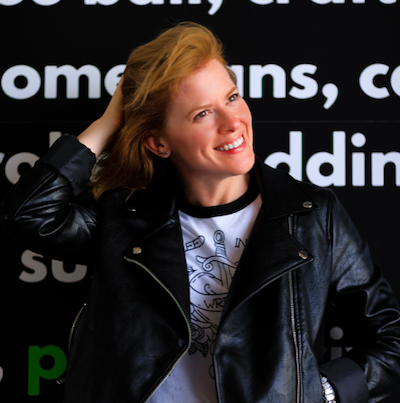
Carla Hoch is the award-winning blogger of FightWrite® and author of the Writer’s Digest book Fight Write: How to Write Believable Fight Scenes. She is a WDU instructor who regularly teaches on the craft of writing fight scenes, action, and violence as well as the mechanics of fighting for writers. Carla is a world champion jiujitsu player and has experience in almost a dozen fighting styles. She lives and trains outside Houston, Texas.