

Creating a Great Cast of Suspects for Your Mystery
Bestselling author of the Sebastian St. Cyr Mysteries C. S. Harris shares eight ways to create a great cast of suspects for your mystery.
The spark for your mystery novel can come from anywhere: the idea for a compelling victim or intriguing killer, a captivating aspect of your story’s setting, or even an unusual way of killing. But once you’ve nailed down your sleuth, victim, and story world, how do you create a great cast of suspects?
All writers are different, and I don’t go about this process in exactly the same way with every book I write. But when it comes time to start nailing down suspects, I typically use some combination of the following approaches.
Start with the story’s setting
What is it about your story world that excites you? What makes this setting different and interesting?
Come up with suspects who will allow you to exploit those elements.
When I started plotting my latest Sebastian St. Cyr mystery, When the Wolves Are Silent, I knew I wanted to create a mystery that would enable me to explore ancient Celtic legends of human sacrifice and weave in the Spa Fields Riots (a fascinating, real-life incident that shook London society in December of 1816). So my story begins with a nasty young aristocrat being burned alive, and the suspects naturally include neo-Druids and reformers with links to Spa Fields.
If your mystery is set in modern New Orleans and you want to explore Mardi Gras krewes, the city’s Catholic school culture, and life in the French Quarter, then craft suspects who will allow you to set scenes in those milieus. And if your story world is 1600 London and you want to write about the Elizabethan theater, court intrigues, and the horrors of the period’s religious persecutions, then make one of your suspects a Shakespearian actor or playwright, one a courtier, one a nobleman hiding a Catholic priest, and one a priest hunter.
Start with your victim
The goal here is basically the same, you’re simply coming at it from a different angle. Because the more interesting and multi-faceted you can make your victim, the easier it will be to create intriguing and varied suspects.
To use the New Orleans example again, if you make your victim a St. Augustine or Jesuit grad who works as a bartender down on Bourbon Street, recently broke up with someone on a Mardi Gras krewe, loves to kayak in the spillway, is the niece or nephew of the mayor, and recently got into a fight with a counterprotester at a civil rights march, then the cast of suspects practically creates itself.
Make your suspects as different as possible
Very few of us have the time to read a book in one or two sittings. I’ll typically put down even a book I like 10 to 20 times, with life presenting powerful distractions in between. So if you want me to remember who “Jenn” is, you need to make her as different from “Meghan” as possible.
Try to vary your suspects’ backgrounds, professions, religions, nationalities, sexual orientations, appearances—anything you can think of. Give them diverse roles in your victim’s life: boss/coworker, ex-lover, brother, friend, rival, etc. And remember to make their names different and memorable. Don’t give me a Jack and a Jason, or even a Kairi if you also have a Keyla.
Make each suspect interesting in their own right
Remember to think of your suspects as characters, unique individuals with real lives, not simply “suspects.” Go beyond the caricatures of the Bitter Daughter or the Greedy Landlord. Create well-rounded people with depth, distinct personalities, voices, and backstories. Give them their own goals, their own fears, their own problems, even their own story arc.
Give your suspects secrets
All of your suspects should be hiding something, and if you can give them two or three secrets, it’s even better. What will make your suspects lie and squirm and act guilty, maybe even kill to keep the truth from coming out?
Think of secrets that will make them look more guilty when your detective uncovers the truth: an argument or source of conflict with the victim they don’t want known, perhaps, or a hidden relationship. And don’t forget secrets from your suspects’ pasts: a previous spouse who died under mysterious circumstances; unsavory associates; a gambling habit.
Particularly useful are secrets that would blow up a suspect’s alibi or even provide a real one if only they dared to reveal it. Maybe your suspect claims he was in bed asleep at the time of the murder, when he was actually across town making love to his brother’s wife. He’s not going to want to admit that when his wife or valet says his bed was empty.
Don’t forget to play with motive, means, and opportunity
Try to vary your suspects’ motives, although you can certainly have two suspects with the same motive, especially if you come at them from slightly different angles. Human beings are subject to a slew of toxic emotions, which provide plenty of motives to choose from: greed, love/lust, fear, rage, revenge, jealousy, hate, mercy, etc., etc.
You can also play with means: Does your suspect have the necessary skills or physical strength to have committed this murder? Maybe make the mother-in-law’s knowledge of poisons one of her secrets.
And don’t forget to pay attention to opportunity, which is basically the presence or lack of an alibi. It’s a particularly fruitful source of great story twists.
Use suspects to up the stakes
How? Consider making one of the prime suspects someone your sleuth cares about: a father, brother, friend, lover. Not only does this give our hero an added incentive to find the real killer, it also presents him with a powerful dilemma: What will he do if his loved one/old friend/mentor really is the killer?
Or make one or more of your suspects dangerous—or dangerously powerful—so that continuing to investigate them threatens the detective’s life, family, livelihood, or a close relationship they don’t want to lose.
You can even up the stakes by making one of your suspects likeable. This might sound counterintuitive, but it works. You can create a suspect who’s so sympathetic and give them such a good reason to have killed the victim that readers will start to worry this great guy or wonderful grandma is going to end up on death row.
Or come at it all completely backwards
I can even envisage a story idea that begins with a cast of suspects, thus requiring the writer to work backwards and create a setting, victim, and detective to go with them.
What an intriguing idea!
Check out C.S. Harris' When the Wolves Are Silent here:
(WD uses affiliate links)
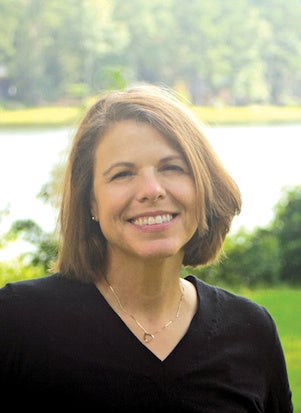
C. S. Harris is the USA Today bestselling author of more than 25 novels, including the Sebastian St. Cyr Mysteries; as C. S. Graham, a thriller series coauthored by former intelligence officer Steven Harris; and seven award-winning historical romances written under the name Candice Proctor. (Photo credit: Samantha Lufti-Proctor)