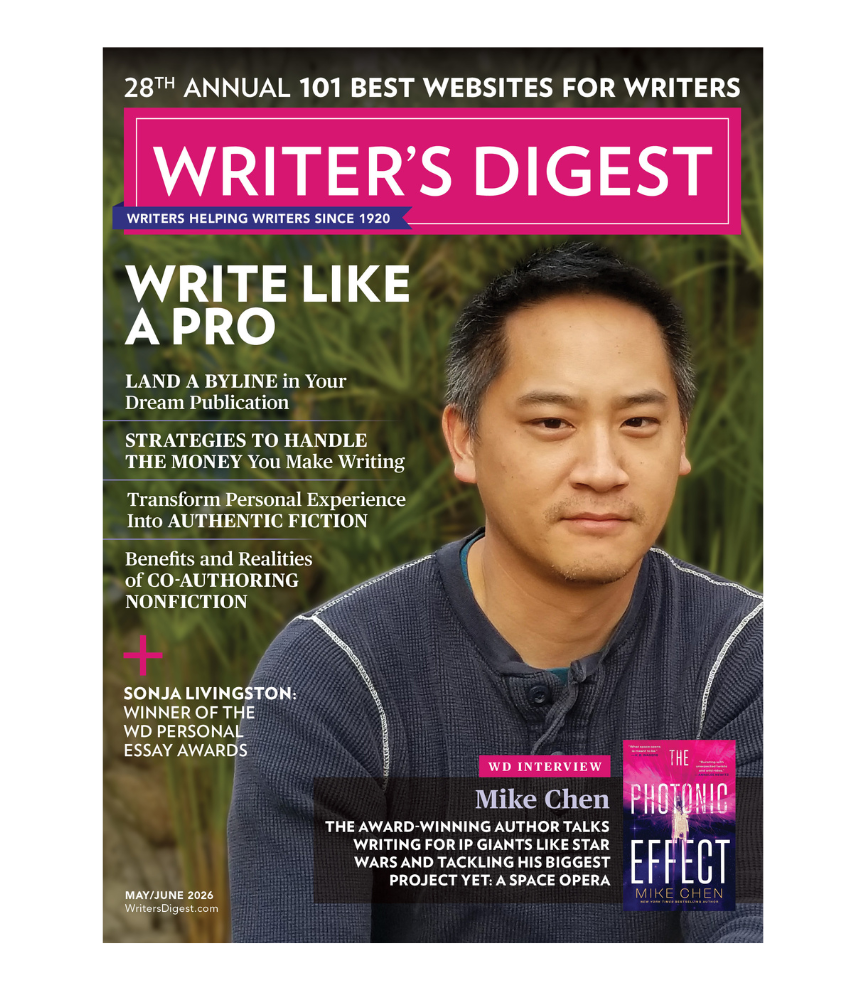
Breaking In: May/June 2026
Debut authors: How they did it, what they learned, and why you can do it, too.
WD uses affiliate links.
Fran Fabriczki
Porcupines
(Literary Fiction, April, Summit)
“Young single mother Sonia’s precocious daughter, Mila, drags her on hilariously disastrous school trip from L.A. to San Francisco, during which Sonia’s checkered past as a Hungarian immigrant is revealed.”
Writes from: London, U.K.
Pre-Porcupines: I had only ever written short stories before this novel, and I hadn’t made much progress in sending those stories out. I knew I wanted to write a novel, but I was hesitant to begin before I felt I had practiced the craft. Of course, it turns out there are certain things you can only learn by writing the whole novel, but at least I felt confident making a start.
Time frame: I started writing the novel at the end of my MA, as my dissertation; from then on, it took about three years total, during which I moved houses, started and ended a new job, and gestated a baby. There were periods of feeling too ill to write at all and then also whole months where I wrote through my work lunch hour consistently. I just had to believe it would all add up eventually.
Enter the agent: My dissertation was awarded the Curtis Brown Prize, which was judged by two brilliant agents, Cathryn Summerhayes and Sabhbh Curran. They told me to get back in touch when I’d finished the novel, which I did. Off the back of this award, I had gotten some interest from other agents in the meantime, but in the end, it felt really great to go with the agents who had loved this project from the beginning, essentially plucking it out of obscurity.
Biggest surprise: I used to work in publishing, so the process itself was familiar to me, and yet, even though I knew there could be long periods of silence before the book is published, and that my publishers were working hard in the background, it still felt strangely isolating sometimes to be out there alone waiting for something to happen. My agent’s advice was to write as much of my next project as I could, which did save my sanity.
What I did right: During my master’s in creative writing, which was a year, I spent time experimenting with different tones and styles, so that by the time it got to the end of the year, I knew how I wanted to write the novel. Then I used my very last workshop to test the novel idea, like a focus group—my peers’ feedback was invaluable and helped me get going with the project in earnest. You can only really focus on the writing and hope the rest will follow.
What I would have done differently: We sold the book a week before I gave birth, and my publishers were very kind about giving me as much time as I needed to get to my edits after I had the baby, but I decided to get back to work probably sooner than I should have. The work went well, but I went a little crazy.
Platform: I am not very active on social media, and I generally find it interferes with writing, but I am working on it, because I’d like to be able to connect to readers directly.
Advice for writers: On the inside cover of my writing notebook for this project, my partner put a Post-it that said ‘Stop starting, start finishing’—the single most useful advice I’ve received. Ideas are nice, but you have to finish something (a story, a novel) and then iterate, otherwise you’ll never know if it has legs.
Next up: I’m trying to get as much of my next novel written before publication. I love writing and I have lots of ideas, so fingers crossed I get to keep doing this.
Website: FranFabriczki.com
Kristen Argyres
My Thorns For Your Roses
(Romantasy, April, Conquest Publishing)
“After falling for the faerie that cursed her, 24-year-old Lark must choose between a marriage of convenience and risking it all to save the love of her life from his cannibal ex.”
Writes from: Bloomington, Ind.
Pre-Thorns: I cut my teeth on fan fiction before I became inspired to write my own original stories—I wrote over a million words before I started My Thorns For Your Roses. I also dabble in short stories to flex my creativity, several of which have been published in anthologies. A few of them tie into the world of My Thorns For Your Roses.
Time frame: I started late November 2022 and finished my first draft the following May. That draft was a monster at 129k words, and I changed my mind about several plot points halfway through. The story made no sense.
By my first query in November 2023, I had trimmed 17k from the manuscript. Like many authors, I queried too early, unaware of industry standards or expectations.
It took a village, but I finally got my manuscript polished in time for the inaugural #SmallPitch event in July 2024 and a full request from Brittany that same day. I signed in early September 2024 to be published in April 2026.
Enter the agent: I heard about Conquest in the comments on QueryTracker early on in my querying journey, but they were not open to submissions until July 2024. I had not considered alternative paths publishing before, but I liked the creative freedom that came with working with a small press. I decided to try the first #SmallPitch event, which allowed authors to pitch their books directly to traditional independent publishers.
I’m so glad I did! Publishing is a slow industry, and unlike the agented route, I didn’t have to immediately dive back into the trenches by going on sub with publishing houses. Once Brittany made an offer of publication, My Thorns For Your Roses had a release date.
Biggest surprise: There are several routes to publishing, and they all have their pros and cons. Small, independent publishers are more willing to take risks and push the boundaries.
Secondly, you are the author of your own story. While editors, writing groups, and beta readers are fantastic resources and can provide valuable insight, not every suggestion will work for the story you want to tell. Stay true to yourself.
What I did right: I learned to get over my own ego and take constructive criticism seriously. Rejection stings, even when wrapped in compliments. Passes pile up and can chip away at your confidence, but when experts in the industry take the time to tell you what you’re doing well, your weaknesses, and how to improve—take the advice and run with it!
What I would have done differently: I would have spent more time editing my manuscript and learning about the industry standards and expectations. My first few queries were cringe-worthy and did not have comp titles. Sometimes all it takes is an extra month or two to make a good story great. Take your time!
Platform: I started out writing fan fiction and had a small, but loyal reader base through AO3 [ArchiveOfOurOwn.org], but admittedly, I haven’t dedicated the time and energy to writing fan fiction now that I have books I need to work on.
I’m still figuring out social media and what kinds of posts to create to engage potential readers, but pretty book covers and character art are huge draws. Engaging with other authors and potential readers is also important.
Advice for writers: Like any other skill, storytelling takes practice. (That means no AI, it stunts your creative process.) The more you write—and read the works of others—the more you learn and the better your craft. Keep writing!
Next up: My Thorns For Your Roses can stand alone, but I’m working on the rest of the trilogy now. Book 2, Along the Hawthorn Path, is scheduled for release in October. There’s a bit of a time skip between books 1 and 2, so Cairnwood looks a bit different than it did at the start of My Thorns For Your Roses.
The final book, Holly, Oak, & Thorn, will come out in 2027. That’s one of the beauties of working with a small, indie publisher—my readers don’t have to wait for years between books in a series.
I have a few other ideas for projects beyond that. I want to expand one of my published horror short stories into full-length novel, and I have a fun idea for a book inspired by the marriage-that-never was between Charlemagne and Irene of Byzantium, but I’m focusing my creative energy on The Cairnwood Reel series for now.
Website: AuthorKristenArgyres.com
Sayuri Stabrowski
Arlo All Over Again
(Picture Book, April, Free Spirit Publishing)
“A big-city tale about how friendship builds confidence—and the unexpected joys that come from trying new things.”
Writes from: NYC (specifically Upper Manhattan in a neighborhood called Washington Heights).
Pre-Arlo: I was writing other picture book manuscripts and trudging through the querying trenches trying to land representation, a book deal, or both.
Time frame: Arlo All Over Again was born from my experiences as a mother of young children. As a mom of three young boys, I have delighted in watching them navigate playground politics and learn to make new friends, take physical and social risks, and develop their comfort levels and boundaries through play. The protagonist’s story was inspired by a few things all at once: my middle child’s reluctance to branch out and try new things as a youngster, my neighborhood’s lovely playgrounds and parks where so many friendships have been made and nurtured, my children’s ability to fall in friendship-love with someone new whilst building a fort or playing a game of pretend and their desire to have future play dates with this new person forever-after, and lastly, an anecdote that a fellow mom-friend shared with me that involved her child developing a fast friendship with someone over the course of an afternoon, losing touch with that new friend for months afterward, only to rediscover them in a summer camp later that year. All of these bits of my real life were points of inspiration that helped me build out my characters, plot and setting until they became the story it is today!
Enter the agent: I am lucky enough to be represented by the wonderfully supportive, thoughtful, and kind Sarah Stephens at Red Fox Literary. I signed with Sarah after attending the SCBWI conference in Fort Lauderdale in spring 2023 and getting a manuscript critique from Karen Grencik (one of the founders of Red Fox). In my meeting with Karen, I discovered that she did not have the capacity to sign new clients, but that she thought I would be a perfect match for Sarah. She had already shared my manuscript with Sarah and was excited to report that Sarah wanted to meet me and read more of my work. I was absolutely thrilled and after a few weeks of agent-client “courtship” (including sharing more work, getting help with the contract and asking all of the questions), we signed!
The wild thing about my experience is that I actually already had the deal for Arlo with Free Spirit in hand before I met Sarah. After participating in a social media pitch contest, Free Spirit reached out to ask about Arlo All Over Again. I subbed the manuscript and got an offer pretty quickly, but had no representation. The Free Spirit team was very kind and flexible in giving me loads of time to try to find representation before signing the contract for the publishing deal. Once Sarah and I signed, she took a closer look at the deal and led the charge in negotiating it so that I could sign it a couple of months after we started working together. Sarah’s keen literary agent skills definitely helped me land the right deal for Arlo and made me realize how much I didn’t know about all of the ins and outs of publishing books!
Biggest surprise: Something that surprised me during the publishing process for Arlo All Over Again was that finding a deal on my own and having it in hand when querying agents did not necessarily help as much as I thought it might. I naively thought I had a golden ticket in hand when I got the offer, and was expecting to be able to sign with an agent instantly. It turns out, unsurprisingly, that there are just no silver bullets or golden tickets! Some agents wanted to examine the deal but still based their offer on my entire body of work, while others didn’t discuss the deal at all in our negotiations, and still others offered to help broker the one deal for me, but weren’t ready to sign into an agent-client relationship off the bat. I knew I was looking for a supportive, editorial agent who wanted to be part of my career and not the one project, so it helped narrow my search, but it was something that surprised me as I began querying after the book deal offer had been made.
I think the biggest takeaway I got from the experience was that publishing is a very relationships-based industry, so breaking into it can feel daunting, if not impossible. However, if you look closely enough and are willing to put yourself out there for critique, feedback and learning, there are lots of opportunities to meet people and hone your craft at the same time. Taking workshops, trying the many contests that exist online, exploring courses, making connections through critique groups and joining big organizations like SCBWI are all great ways to open doors for writers at all levels. There are no shortcuts to getting representation or a book deal, so we all have to keep writing, revising, learning, and connecting as we work towards signing with an agent or landing a deal. Without attending the SCBWI conference and signing up for a manuscript critique with Karen Grencik, I may never have met Sarah or sold Arlo All Over Again. I am eternally grateful to opportunities such as those available at conferences and through writing organizations like SCBWI, Highlights, and Inked Voices (among others)!
What I did right: Searching for an agent and checking your email daily for that highly anticipated, seemingly elusive yes is an emotionally and physically exhausting process. My agent tracker was full of red and orange cells denoting the many rejections I had piling up in my inbox during my time in the querying trenches. Although I was often demoralized by the process, I actually did enjoy the agency I had in researching agents, revising my query letter and reaching out to folks who were open to submissions. The cold queries did not lead to a lot of success for me, but they gave me a lot of practice in courage, in taking and implementing feedback, and in building the thicker skin necessary to be an author.
What did work for me came as a result of all that time spent researching agencies and seeking representation because as I explored various corners of the children’s book world, I discovered contests and organizations that supported authors in their craft and granted them access to the decision-makers in the industry. Once I began to engage in the world of children’s books more actively, I learned how to present my work, how to find critique partners and how to examine my work critically for the market. Taking workshops, meeting other authors, signing up for critiques with industry professionals and putting my work and myself out there were the steps that I think really propelled me towards my agent and my book deal. I highly recommend exploring the Highlights Foundation and all that they have to offer to children’s book authors of every stripe, Inked Voices and their awesome seasonal line-ups of workshops and critique groups and SCBWI’s local and national programming for children’s book writers and illustrators looking for support, learning and connection. I have also been active in 12x12, PB Rising Stars, Storystorm, and other annual contests and support circles. For some of these experiences, I have invested financially to join, while others are completely free, and all offer scholarships and financial assistance to try to keep access available to all creators. Meeting new people, sharing my writing, and learning with and from peers have continued to be the most rewarding parts of engaging in the publishing industry. Even now that I am agented, I seek support, learning, and connection through these organizations and my critique groups so that I can continue to develop my writing and nurture the relationships I’m making in this industry.
What I would have done differently: I wouldn’t change a thing. I don’t think there is any one way or right path to publication, and my journey with Arlo has certainly been unique, but lovely. I have loved working with the team at Free Spirit on bringing Oliver and Arlo to life, and I love working with my agent, Sarah. Her creative, editorial eye and her support and kindness through the ups and downs of the business have been incredible. I am grateful for all of the friends I’m making, the lessons I’m learning and the creative adventures I’m going on as I continue to read, write, create and navigate the publishing industry.
Platform: I definitely did not, and still do not yet, have a platform in place. I am a public middle-school teacher and parent of three young children, so my writing life is squeezed into the spaces in between. As such, I’ve never been in a position to create a platform for my own visibility as a writer, but I’m working to build a platform on social media and through all those connections I’ve been making along the way. A group of authors in my agency have come together as a promotional group, and that has been a lifeline for me. I am learning so much about posting reviews, finding opportunities for school and library visits, conference planning, book festivals and social media branding alongside these other authors. Together, we share the work of building our platforms by boosting one another, celebrating each other’s book birthdays and supporting social media posts and industry milestones. Writing and self-promotion can feel really isolating, but I’ve found that there are many writers who are seeking support and connection through all steps of the process. Having others to lean on and learn from has really helped me find my footing in all aspects of writing and publishing, from drafting to revising to negotiating to celebrating to marketing and promoting!
Advice for writers: As a bit of a perfectionist with classic English teacher habits of constantly looking for things to fix and tweak, I can get stuck in a drafting cycle. One of my best friends and critique partners offered up such a valuable piece of advice that I play it on repeat in my brain every time I find myself getting stuck in a drafting spiral … Writing a first draft is like pouring sand into a sandbox. You just have to get it done so that you can make it pretty later. Remembering that revising is where so much of the beauty happens releases me of the pressure to be perfect on the first go-round and motivates me to just get it done.
Next up: While I am still working on picture book manuscripts and we are on sub with some exciting projects, I am very busy trying to take my own advice and finish the first draft of a middle-grade novel that I’ve been working on. Can’t report any specifics, but am hopeful to have a spirited manuscript to share with the world soon!
Website: SayuriStabrowski.com