
On Writing Platonic Love
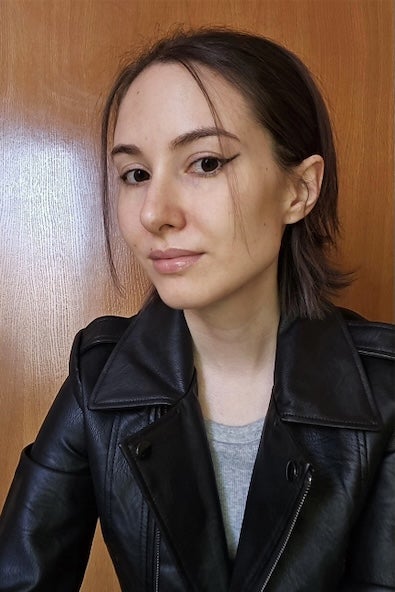
Author L.V. Peñalba dives into the idea of writing platonic love and why it is just as essential as romantic love.
I’ve always disliked the expression ‘more than friends,’ as if friendship paled in comparison to dating someone. Platonic love can be just as epic, intense, or heartbreaking as romance, and a good romantic relationship is built on a strong foundational friendship, or the desire to build one. Love isn’t a monolith, a pyramid with different tiers and hierarchies where romantic love sits at the top. To me, love is a malleable thing that each person gets to sculpt.
I think writing platonic love isn’t so much about pointing out how it’s different from romance, because in many ways they can be similar. Two people, two souls caring for each other, is love. In some cases, it takes a romantic shape. In others, it takes a platonic one. Sometimes it blurs the line between the two, like in queerplatonic relationships (QPRs). But no matter what, platonic love is not a consolation prize; it is a whole damn treasure. It’s something I kept in mind when developing the different relationships between the characters in Shapes of Love. I wanted to write a love story that wasn’t a romance.
So much of our lives is built around the belief that being in a romantic relationship and finding the one is the only way to be truly known and cared for. In movies, the credits don’t roll until the main couple gets their happy ending and rides off into the sunset. If they don’t, it feels bittersweet, unresolved, because the protagonist ends up ‘alone.’
Singleness is perceived as a temporary state; the trenches of a war you have to claw your way out of if you don’t want to get left behind in life. As we grow older, we’re told that deep connections, real intimacy, is reserved for romantic relationships, like they’re the only salvation to loneliness. Dating can feel like a race, an endless game of musical chairs. Hurry up, lest someone claims your spot and you can’t play anymore. There was a time when I thought I had to catch up, play the game too, because of this unspoken rule we’re conditioned to live by: that milestones are achieved in tandem. It bleeds into everything: If you want to come home to someone, afford a house, have a travel companion, start a family, you “must” have a romantic partner, whether you want one or not.
The journey of my main character, Sasha, mirrors some of my experiences as a person on the aromantic and asexual spectrums. She’s not scared of being single, but she’s scared of future loneliness. She feels like her love will never be enough to make someone stay, regardless of how much of it she holds or has to give, unless it takes a romantic shape. She is willing to destroy herself to fit into the idea people have of her, because coming out might alienate her from her peers and force her to come to terms with the prospect of never being someone’s favorite person. As if, by accepting herself, a lawyer was going to puff into existence, hand her a contract, and ask her: Do you consent to being lonely for the rest of your life? By claiming this label, you agree to solitude!
Sometimes we talk about platonic love while simultaneously comparing it to romantic love, like how it doesn’t play games or hold certain expectations, but we are still defining it by likening it to romance, instead of letting it be its own thing. Similarly, being aromantic or asexual is usually seen as an ‘absence.’ And absence of what? Love? Aroace people have so much love to give; it just happens to take on a different shape from romantic love. And if it does, it’s rarely or under specific circumstances. I find it dumb, how humans like to think in binary terms: Either you love romantically or you haven’t loved at all. But we’re missing out on so much beauty by sticking to a predetermined idea of what life and love should look like.
One time I was talking to a friend who was moving in with her romantic partner. She described it as bittersweet, since she didn’t want to leave her friends and wished she could still live with them as well as her partner. I was confused in a way, because hey! You can! Living in a big house or the same building with the people who matter to you the most sounded like an absolute dream. Why isn’t this more common? To choose family, safety, and community with and beyond your partner. All we need is love, yes. But romance isn’t all the love we need.
It will come as no surprise to anyone at this point that my favorite trope is found family. No matter what type of bond these characters share, they still choose to belong with each other. So, my only advice to someone who wants to write stories with different types of love is to let your characters get to know each other as people. I try to ask myself: Do they like spending time with each other? And if I’m writing romance, would these people hang out if they weren’t in love? Would they be friends? I let them choose each other, in whatever ways feel natural to them.
And, to the person reading this, I hope you can choose yourself too. You have free will, you can write your own story, and you can shape what love and life mean to you. You’re so much more than what people tell you you should be. I am the person I am today thanks to the love I’ve given and received so far, the experiences and the people who’ve become pieces of the soul I get to shape thanks to them.
Check out L.V. Peñalba's Shapes of Love here:
(WD uses affiliate links)