A License to Be Creative as Journalists Turned Authors
Author and journalist Srianthi Perera talks with other journalists turned authors to discover how journalism helps them write books.
Many writers make the progression from journalism to novel writing, using inherent skills and relishing in the literary license that can place a river in the middle of a city or make animals talk. Others progress to long-form nonfiction and stay true to well-versed news reporting style.
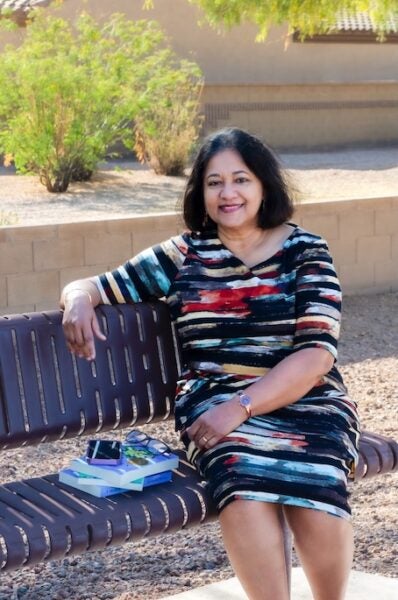
In my case, journalism informs my creative writing. A deep-seated training in accuracy is always at my behest—somewhat of a wet blanket, really—nudging me when I write creatively and making sure I avoid drawing fanciful statements out of thin air. Hence, I’m a gentle user of creative license in my debut historical novel, A Maiden’s Prayer, a whimsical coming-of-age novel set in 1970s Sri Lanka.
How does journalism impact writers on their journey to becoming published authors in other genres?
“I was a fiction writer before I was a journalist. However, I was a professional journalist before I was a published author,” said Sabrina Grimaldi, an Arizona-born journalist and editor. The author of a YA novel, We Are Not The Same, she started writing her first “book” at age seven inspired by a Taylor Swift song, filled with magic and dragons. “By the end of high school, I had written my first novel in its entirety—an apocalyptic YA that piggy-backed off of the popular dystopias of the time,” she recalled.
Today, Grimaldi has plenty of reporting credits, and finds equal pleasure in writing news and fiction. She finds journalistic writing and fiction writing surprisingly alike and toggles easily between the two.
“As a journalist, you're telling a story. As an author, you're telling a story. The only difference? Fact versus fiction. As long as you aren't writing breaking news, feature stories can actually be really fun to write. How can you hook the reader? How can you tell this story in a way that is enjoyable, yet still reliable? So, when I'm swapping back and forth, I'm actually in quite a similar mindset,” she said.
Scriptwriter and columnist Jon Gabriel’s background as a US Navy submarine veteran with knowledge in the Pacific Theatre of World War II led him to write a novel, Sink the Rising Sun.
“Since my novel was historical fiction, I used my long background in research to ensure every detail was accurate. Immersing myself in the details of World War II-era Australia and the primitive submarine operations of that time allowed me to craft realistic characters facing the shock of global conflict,” he said.
To Gabriel, a serious disadvantage for the would-be novelist is journalism’s requirement of terse prose.
“Readers want to live in a novel with all its sensory richness instead of just being provided essential facts and figures,” he said. His use of literary license was also minimal as real-world details served as a scaffolding for the characters to act within.
Betty Webb is on the other end of the spectrum. A former reporter at The East Valley Tribune, she has used literary license in her 20 novels, which includes the popular 10-book mystery series starring private detective Lena Jones. In her Gunn Zoo series set in the Phoenix Zoo, she fictionally murders someone. Also, there is a talking giant anteater from Belize.
Webb also found journalism skills a blessing for writing fiction because it kept the author well-grounded in truth.
As a newspaper reporter, Brian Wedemeyer always wanted to write a book. “You see some of the great journalists publishing books and you dream about doing the same,” he said.
Wedemeyer later became an educator and is now an elementary school principal in rural Arizona. But he achieved his journalism dream all the same. While watching a documentary, he had a question about the O.J. Simpson murder case: “How did Ron Goldman get to Nicole’s house that night?” He could not find the answer.
“The longer I came up with nothing, the harder I kept searching. It was right around this time I could feel the journalist in me coming back to life. I got my hands on court transcripts and other documents from both the criminal and civil trials, and I stumbled upon these other stories,” Wedemeyer said.
His friends thought he was crazy.
“Without a doubt, I think my skills as a journalist helped me throughout. The book would not have happened without those years I spent in the newsroom sifting through police reports, making phone calls, and digging for the bigger stories. I always thought my biggest strength as a reporter was my ability to convince somewhat reluctant people to go on the record, and then get them to open up. That really helped me with this book,” he said.
Wedemeyer’s search for the answer led him to write the nonfiction book, OJ's MOON: Untold True Stories from the Other Side, which features three stories with direct and indirect ties to the OJ case. He writes conversationally, often chiming in with his own comments, something he was trained to avoid in journalism. Beyond that, he follows journalism rules in his authorship (though he did use literary license in his book’s title).
Meet these and other authors from throughout the Grand Canyon State at the Arizona Author Book Festival on Sunday, May 3 in Downtown Phoenix. The free community event will feature author talks, book signings, children’s story time, food, live music and giveaways. The festival supports local authors, champions literacy, and raises autism acceptance; 100 percent of sponsorships and vendor fees benefit SEEDs for Autism, a nonprofit organization that provides education, social skills, and vocational training for teens and adults on the spectrum.