
When Numbers Meet Words: What Finance Taught Me About Writing a Powerful Memoir
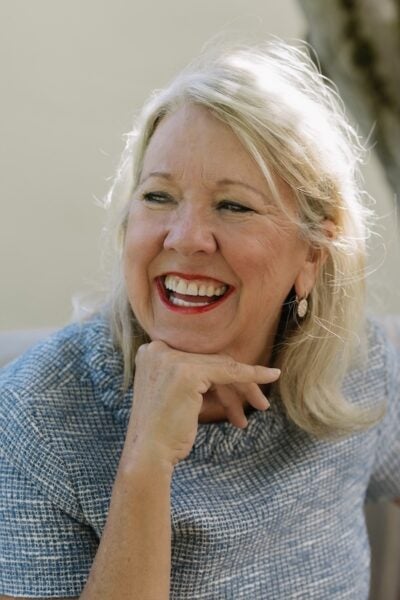
Author Cheryl B. King shares what finance taught her about writing a memoir and how it can help inform others.
For more than 30 years, I worked in institutional investing, where every decision is measured, structured, and expected to deliver a return. You learn swiftly that not every asset belongs in a portfolio simply because it exists. It must serve a purpose, earn its place, and contribute to the whole. When I sat down to write my memoir, I realized I didn’t want to abandon that mindset. I wanted to apply it! After all, write what you know.
Most memoirs do not fail for lack of experience. They fail because experience alone is not enough. A life is not automatically a book. Memory is not yet meaning. A series of vivid scenes, no matter how honestly rendered, does not become a satisfying memoir until the writer shapes those scenes into insight to build something from. That meant asking questions I had spent my career asking in another language: What belongs? What compounds? What adds value over time? What is emotionally interesting but strategically unnecessary? What gives the reader not just a witness to my life, but a framework for thinking about their own?
In the end, finance made my writing more disciplined and more serious about usefulness. It taught me that heart matters more when structure is strong enough to hold it.
Memoir Must Move Beyond Confession
Readers come for interpretation, pattern, and resonance. They want to know not only what happened, but what you now understand about what happened. That is what exquisitely separates a private recollection from a literary memoir.
Mary Karr does this brilliantly. With memoir, we've come to expect a new and rich life story laying before us a stranger's vulnerable parts. Then we act as voyeurs and vultures picking over their experiences until one threads us together. But what makes The Liars’ Club endure is that she writes with authority about what memory can and cannot do, and she shapes raw material into intelligence on the page. Jeannette Walls does something similar in The Glass Castle. The family story is unforgettable, yes, but what gives it lasting force is the writer’s restraint. She does not over-explain. She lets the details accumulate until the reader sees the emotional architecture for themselves.
In my field, a client would never be satisfied if I simply handed over pages of market activity with no analysis. Information without interpretation is incomplete. Memoir works the same way. If I recount a moment from childhood, a friendship, a career pivot, or a painful recalibration in marriage or identity, the story cannot stop at the anecdote. The deeper task is asking: Why this scene? Why now? What does it reveal that extends beyond me?
Writers often hear, “Tell the truth.” That is necessary, but it is not sufficient. The greater challenge is to tell the truth in a form that creates meaning for someone else.
Selection Is an Act of Intelligence
In investing, one of the hardest disciplines is deciding what not to include. More assets do not automatically create a better portfolio. Too much can create dilution, drag, distraction. The same is true in memoir. The existence of a memory does not guarantee its value on the page.
This was one of the hardest lessons for me because like many first-time memoirists, I began with attachment. I remembered certain stories vividly. I knew how they felt. I knew why they mattered to me. Yeah! What a feeling.
Still, memoir is not built on private significance alone. The writer must convert private significance into public meaning. We must choose scenes that illuminate authority, education, loyalty, rupture, and self-invention. Such precision became important to me. I had to ask myself, is this scene here because I remember it fondly or because it reveals something essential about worth, agency, belonging, reinvention, or choice? Is it carrying thematic weight, or am I carrying it out of sentiment?
Selection is a craft!
Structure Is Not the Enemy of Feeling
Many writers approach memoir as though structure might somehow diminish authenticity. I found the opposite to be true. Structure is what allows feeling to land. A reader needs orientation because they do not live inside your memory. They need to understand what kind of journey they are on and why one chapter belongs next to another. They need progression, not simply accumulation.
This is where my professional training helped me most. I am used to looking at individual parts in relation to the whole. I knew instinctively that a memoir, like a portfolio, needed balance, or anchors, contrasts, sequence, and internal logic. Thus, instead of writing my book as a straightforward chronology, I organized it thematically around the core areas where worth is built or depleted: choices, identity, relationships, work, boundaries, resilience, and reinvention. That structure gave the book coherence. It also gave me a test for each chapter: Does this deepen the reader’s understanding of the central argument, or is it merely another story from my life?
Cheryl Strayed’s Wild is a useful reminder that a memoir can move linearly while still operating thematically. The hike is the spine, but the real narrative is grief, self-destruction, endurance, and reconstruction. The physical journey matters because of the inner one. That clarity gives it force.
Reflection Is Where the Return Lives
Readers need scenes. Epic backdrops, bodies in rooms sensating or in conflict, voices, risk, desire, shame, movement, tension. They need to see the sewing machine carried up the stairs, the father at the mirror, friendships tested over time, a woman realizing a life must be recalibrated. Scene creates emotional entry. Yet reflection is where the value often crystallizes and the writer earns their authority. Reflection is how the reader understands why what just happened mattered.
This is one reason Vivian Gornick’s distinction between the “situation” and the “story” has stayed with so many nonfiction writers. The situation is the plot-level material, the events that happened. The story is the deeper emotional and intellectual movement the writer makes in relation to those events. Memoir needs both. Without situation, the book has no momentum. Without story, it has no consequence.
In my own work, I found that I had to be willing to remember and interpret. Not to flatten complexity into a lesson, but to locate the shift in understanding. Where did I become more self-aware? Where did a value get tested? Where did my understanding of independence, belonging, or forgiveness mature? Where did I move from instinct to language?
Usefulness and Art Can Get Along!
Because my background is in finance and strategy, I knew I wanted my memoir to be useful. I wanted a reader to close the book with more than admiration or recognition. I wanted them to leave with clearer questions, stronger self-respect, and a more deliberate relationship to their own choices. For some writers, the word “useful” can sound reductive, as though utility belongs to the world of manuals and not literature. I see it differently. The memoirs that stay with us are often useful in the deepest possible sense. They help us name something, endure, miraculously see our own lives more truthfully.
Joan Didion’s work is useful. So is Maya Angelou’s. So is Frank McCourt’s. They all refine perception and alter the reader’s ability to understand experience. That, to me, is one of the highest forms of usefulness a writer can offer. In my own book, I leaned into that idea. I wanted each chapter to create both narrative and return. Greater clarity, self-recognition. Intentionality? The older I get, the less interested I am in writing that merely impresses. I want writing that serves.
People sometimes assume numbers and words live on opposite sides of the brain, opposite sides of the personality, opposite sides of the self. My experience has been the reverse. Finance taught me to think in terms of long-term value, not short-term reaction. It taught me that structure protects meaning rather than diminishes it. Every part of a whole must contribute, and clarity is a form of respect. The best memoirs measure a life and spark someone else to value their own.
Check out Cheryl B. King's Your Worth here:
(WD uses affiliate links)