The Family Business
As a mother and daughter on opposite sides of the desk, Novelist Wanda M. Morris and Senior Editor at Little, Brown Books for Young Readers Alexandra Hightower shed light on the publishing industry and what they’ve learned from each other.
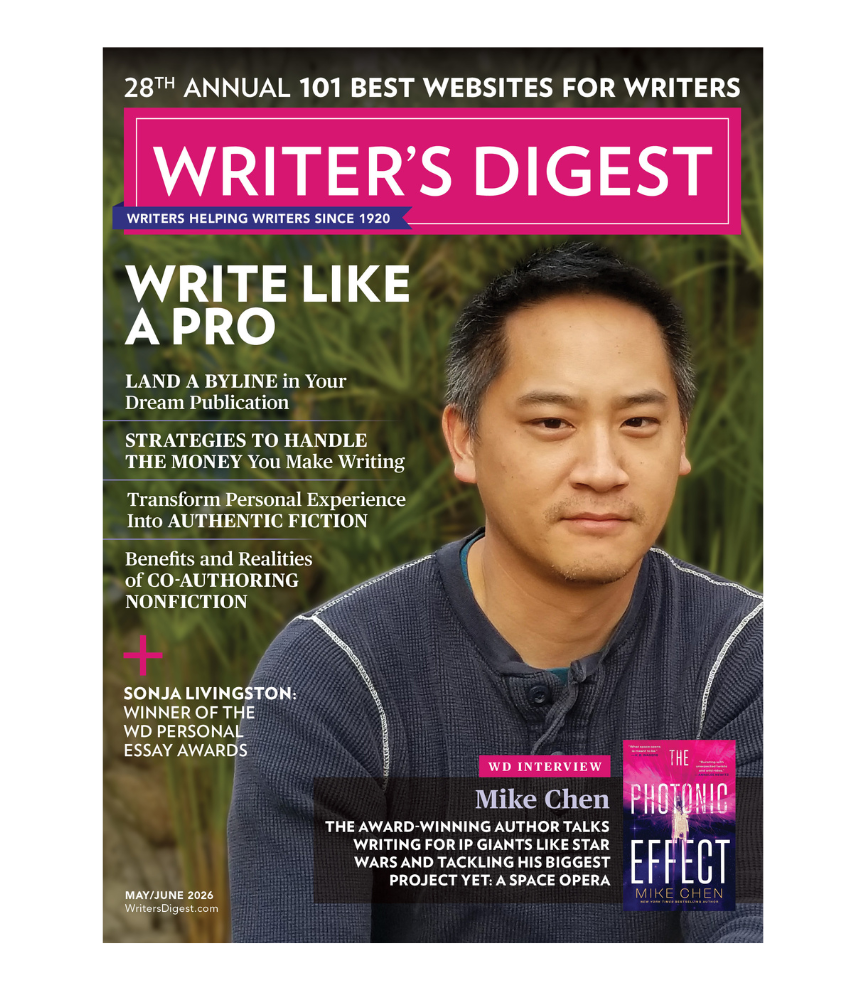
A condensed version of this interview appears in the May/June 2026 issue of Writer's Digest.
Writers and editors go hand-in-hand in traditional publishing. Their work feeds off each other, and typically, both are more successful when they work closely together. So, for this issue about how to Write Like a Pro, in which we aim to demystify writing and publishing for authors who wish to make a career out of their creative endeavors, WD spoke with mother and daughter, Wanda M. Morris and Alexandra Hightower, who have both made successful careers in publishing, about how they got started, what helped them find that success, and what they’ve learned about the industry from each other.
Wanda M. Morris is the award-winning author of three novels: All Her Little Secrets, which was named one of the Best Books of 2021 by Hudson Booksellers; Anywhere You Run, named one of the Top 10 Crime Fiction Books of 2022 by The New York Times and winner of the Anthony Award and Lefty Award for Best Historical Novel; and What You Leave Behind, which was nominated for the 2025 NAACP Award for Outstanding Literary Fiction and earned Morris the 2025 Georgia Author of the Year for Mystery.
Morris’ daughter, Alexandra Hightower, is a Senior Editor at Little, Brown Books for Young Readers and has edited many award-winning titles, including Freewater by Amina Luqman-Dawson, which won the 2023 Newbery Award and the 2023 Coretta Scott King Book Award, and The Me I Choose to Be by Natasha Tarpley and Kahran and Regis Bethencourt, which won the 2022 Coretta Scott King-John Steptoe New Talent Award. She was a Publishers Weekly Star Watch honoree in 2021 and is a cofounder of the nonprofit Inkluded.
We began by talking about how Alexandra and Wanda each found their way into publishing.
Let’s talk about how you each ended up in the publishing industry. Alex, was being an editor something you always knew you wanted to do, or did you have other career goals first?
Hightower: I always tell people I had a more circuitous route into publishing. I was actually pre-med in undergrad at Johns Hopkins University! But halfway through college, while taking a combination of science-based courses and English and writing-based ones, I realized that I wanted to look outside of a medical track. I finished out my degrees (B.S. in Neuroscience with a minor in Theater) while researching how to use my literary skill set. I decided to attend New York University for a M.S. in Publishing Print & Digital Media and landed my first full-time editorial assistant job in my last semester of the program. There were many internships and part time jobs along the way, but once I ended up working as an editor in children’s literature, I knew I’d found my fit.
Wanda, I know you had another career entirely before publishing your first book. How and when did you decide to start writing?
Morris: That’s right. I worked for years as an in-house lawyer for several corporations. Over those years, I kept tamping down my dream to write creatively. During one particularly harrowing year, I got very sick. Like most challenging moments, it became a lightbulb moment for me because I realized the fragility of life. I decided to stop dreaming about writing and actually [started] doing it. But interestingly enough, even after I started writing, I did it in secret! My own husband didn’t even know I was writing a book. But I needed the unfettered space to chase this dream without judgment or pity. Of course, once I let my family in on it, they’ve been my biggest supporters.
Wanda, since this is essentially a second career for you, how did you educate yourself on the craft of writing and business of publishing?
Morris: Lawyers do a great deal of writing, but it’s a different type of writing. Writing a legal brief is very different from writing a creative narrative. My first few attempts at writing fiction were very stilted and awkward. I queried an agent, who rightfully turned down my first book, but in doing so, she gave me a gift. She told me that my story dragged and lacked character depth. I knew that I needed something more than a good premise. So, I started taking online courses and participated in local writing groups. When I felt brave enough, I applied to Yale Writers Workshop and wonder upon wonders, I got in. I learned so much about characterization and pacing and other things that make for a great story.
Alexandra, from my own experience as an editor, I know this career path isn’t always a straight trajectory, and so often, for better or worse, has to do with making the right connections. How did you work your way up to your position as senior editor?
Hightower: In publishing, everyone knows everyone. With that in mind, networking is crucial. Yes, your passion for books and writing skills are needed, but it’s a competitive industry with many people angling for the same few spots. I’ll never forget the day I attended an agent/editor-author retreat in the midst of my entry level job search and interview process. I struck up a conversation with a few children’s book editors on the train back home, and after exchanging business cards and pitching myself, they put me on the radar of an editor who would eventually become my first boss.
Climbing from editorial assistant to senior editor was a journey, but one that I’m grateful for. The initial years of an editorial job are a combination of supporting your supervisors while building your own list of clients and books. Finding that “breakout” book that pushes you towards promotion can be tricky—a “good book” is a subjective term, after all. But I’ve always aimed to acquire projects with writing that compels me (to laugh, to cry, or even scream) and a message that feels fresh.
Were there any roadblocks you encountered along the way or something you wished you’d known earlier about how the industry works?
Hightower: One of the unexpected hard parts of growing as an editor is the imposter syndrome. There were moments along the way when I questioned my taste (was I making the right decision in passing on that project?) or experience (did I know the right way to guide this story, were my edits “right”?). Gaining that confidence took time and practice, as well as communication. Talking through my anxieties, especially with more experienced peers, taught me that I do have the skills and perspective. And over time, I learned to trust myself.
What are some of your recent projects you’re most proud of?
Hightower: I’ve learned so much as an editor from my work on the Nightweaver series by R.M. Gray (Nightweaver, Starchaser, and the forthcoming Cursebreaker). Gray independently published the first book of her series, and it’s been a delight to work with her to release the entire romantasy trilogy from a traditional publisher. She brought such valuable understandings of audience and marketing to the table, and with her partnership, we’ve been able to release gorgeous, deluxe editions of her books on a breakneck 9-month schedule.
There’s a special place in my heart for Freewater by Amina Luqman-Dawson, the 2023 Newbery Medal Winner. The novel, inspired by the lesser-known maroon history in the United States, follows a young formerly enslaved boy’s escape to freedom. It effortlessly toes that line of literary and commercial with its bite sized chapters, quick pacing, and vivid prose. The book was honored with the Newbery Medal in 2023, and upon the announcement of the award, we learned that the author was the third Black woman to be awarded that medal in the award’s 101–year history, and I was the first Black editor to edit a Newbery-winning book.
As a mother and daughter in the same industry but on opposite sides of the desk, what have your conversations with each other helped you understand about the opposite role?
Morris: OK, I’m going to sound biased here, but Alexandra is a brilliant editor. After all, she has made history in the publishing industry by being the first Black editor of a Newberry Award-winning book! While she doesn’t edit my work (I refuse to let her see my drivel before my own editor has reviewed it!), the conversations we have about what makes for a good story are always so insightful. She also has a keen eye for the business of publishing that is extremely useful to a relative newcomer like me.
Hightower: She’s too kind! But in all honesty, it’s been so eye-opening to see the blood, sweat, and tears of the revision process up close. Also, some of the questions she’s asked me about different parts of the publishing process (for example, what goes into cover design on the house side or, how do editors pitch books internally) remind me that transparency can make a huge impact. Often, I note those experiences of hers and aim to offer clarity with the authors on my own list.
Let’s talk about that. There have been numerous reports in the past several years about the various challenges people from underrepresented backgrounds face in the publishing industry. As two Black women who have found success in publishing, what advice do you have for others who want careers in this industry?
Morris: Publishing is a tough business, and this is coming from a woman who spent decades in the cut-throat world of the legal industry. Publishing is a highly subjective business that continually changes. In its quest to respond to perceived market and corporate pressure, a lot of really great stories from writers in marginalized communities do not get the marketing funding from publishers. When books do not get the investment and exposure, they do not get the lift that gains new readers. Knowing this, I decided a long time ago, I will control the things I can control, like writing the best book I can, and leave the things I cannot control in God’s hands.
I tell everyone coming into publishing about the two things that helped me. First, build a community of your writing peers. I had the good fortune, and the bravery, to reach out to another mystery author, Kellye Garrett, to gush over her work and tell her how glad I was to see another female writer of color doing what I wanted to do. At the time, she, along with Walter Mosely and Gigi Pandian, were forming the support group Crime Writers of Color. I jumped at her invitation for me to join this group of like-minded mystery writers. I joined Sisters in Crime and the Atlanta Writers Club. Your family and friends are great for keeping your spirits up, but you need someone who understands what it’s like to get rejected … repeatedly and still find the strength to get up and keep doing this crazy thing called writing.
The other thing I recommend is that you run your own race. Do not compare your writing journey to that of other writers. There will always be another writer with more accolades, better sales, better publicity, etc. Take your wins, in whatever form, and celebrate them. In the end, you need to be your own biggest fan!
Hightower: Community is everything. Lee & Low has conducted fantastic surveys (LeeAndLow.com/about/diversity-baseline-survey/dbs3/) on diversity within the publishing industry for years, and while these results show that the industry is becoming more inclusive, there’s still a long way to go. Alongside a group of peers, I helped cofound Inkluded (Inkluded.org), a nonprofit that champions diversity in publishing by actively working to train and place young people from underrepresented groups into their first publishing jobs. Helping folks from marginalized communities get their foot in the door has provided me with a sense of purpose. But even beyond that, the Inkluded community itself—all of the hardworking publishing people keeping this nonprofit running—is a grounding force. Hiring is great, but retention in publishing can be particularly challenging for people from traditionally marginalized backgrounds, and simply connecting with these industry professionals gives me the energy to keep going and doing the work.
Wanda, what has been the best part of your writing career thus far?
Morris: Meeting readers! I didn’t know how much I’d enjoy meeting fellow book lovers like me. I love when someone reads my books and tells me that the story resonated with them or the characters reminded them of someone in their family or their workplace. I did a book launch event for my third book, What You Leave Behind. A woman came up to the signing table. She told me that she read my book while she was going through chemo treatment for cancer, and that coming to the launch event was the first time she had ventured out since her treatment ended. She told me that reading my book took her mind off her health challenges. I hugged her and we both wept. I had no idea that while I was sitting alone writing that book, it would have such an impact.
What’s next for you? Any new books in the works?
Morris: My next book comes out February 2027. It’s a thriller entitled This Never Happens Here. When a wealthy young couple is murdered and their 6-year-old daughter disappears, two female detectives are launched into a harrowing journey to find a serial killer whose exploits have increased already simmering tensions between the haves and the have nots in a racially charged city. It explores the topics of motherhood and wealth disparity in this country.
Alexandra, what advice do you have for writers who want to write for children or young adults?
Hightower: Never speak down to your audience and meet young readers with authenticity. Often, they can sniff out disingenuous character or forced lingo from a mile away (I know this from my now 16-year-old brother).
Hold on to your passion. There are many times when publishing can feel discouraging, but so much is about finding that right match. Everyone’s path is different—for some, finding that match happens in a matter of weeks, while others may need months or even years. But the most important thing is making those connections and finding people who see your vision.
Are there any particular types of books you’re looking for now?
Hightower: I’m primarily seeking agented middle-grade, young adult, and new adult projects. I’m also acquiring very select picture books. And across the board, I’m eager to acquire books from underrepresented voices. I’m a fan of fantasy with fresh magic systems and unique world-building, grounded stories with a speculative twist, interesting takes on ancestry and what we inherit (both physical and emotional), and angsty, banter-filled romances and rom-coms.

About Amy Jones
Amy Jones is the Editor-in-Chief of Writer’s Digest and was the managing content director for WD Books. She is the editor of the Novel and Short Story Writer's Market and Children's Writer's and Illustrator's Market. Prior to joining the WD team, Amy was the managing editor for North Light Books and IMPACT Books. Like most WD staffers, Amy is a voracious reader and has a particular interest in literary fiction, historical fiction, steamy romance, and page-turning mysteries. When she’s not reading, Amy can be found daydreaming about Italy or volunteering at her local no-kill cat shelter. Find Amy on Twitter @AmyMJones_5.