From Poetry to Murder: How a Poet Writes Crime
Poet and author Erica Wright shares the common threads of poetry and crime fiction while also explaining how a poet writes crime.
For many years, I taught at John Jay College of Criminal Justice in New York City, and I would bring in a poem for my students on the first day. I taught required Composition courses to (mostly) teenagers who wanted to be detectives, forensic pathologists, FBI agents, and the like. By and large, the students did not want to take writing courses, and I always considered it a personal challenge to win them over. With that Herculean task in mind, I swapped out different poems until I landed on one that resonated with this demographic: Carolyn Forché’s “The Colonel.”
“The Colonel” is from Forché’s collection The Country Between Us, which recounts the writer’s experiences in 1970s El Salvador, a country under military dictatorship and plagued by human rights abuses, including both torture and murder. In “The Colonel,” the speaker receives impeccable hospitality at the home of a military leader until he empties a bag of severed human ears onto the kitchen table, saying “Something for your poetry, no?” It’s a shocking moment, one which stayed with my students until the end of term when they would often mention this poem as one of their favorite readings.
I believe what spoke to them about Forché’s poem is that the stakes are crystal clear. The stakes are, in fact, life or death. What kind of trouble might one wrong word get you? With their future careers in mind, this was an important concept to understand. Miss a clue, botch an interview, mishandle evidence, or lose a lab result, and a killer might go free.
A good poem and a good crime novel share this common trait of high stakes. When I’m reading a favorite mystery writer, I never pause to ask, why should I care? I know that I should care because crime unravels a community. In Tana French’s The Trespasser, the detective suspects corruption in her own department, making her pursuits feel particularly important as well as dangerous. In Oyinkan Braithwaite’s My Sister, the Serial Killer, we know from the title that violence is a family affair.
Some poets maintain that all poetry is political. I wonder if this is entirely true, but I do understand the sentiment. A poem about a beautiful oak growing in a national park might not mention funding cuts or climate change, but the unspoken background information makes the tree mean more. I do tend to agree with John Keats’s theory of negative capability. He wrote that a great writer is “capable of being in uncertainties, Mysteries, doubts, without any irritable reaching after fact and reason.” That is, a poet can contemplate unsolvable questions of love, sorrow, mortality, and similarly grand subjects.
The central question of a mystery novel—that is, who did it?—needs to be answered unless the writer wants some royally peeved readers. However, this genre does allow writers and readers to look death squarely in the face, to baldly consider what it means to dies.
While a poet might ask what happens after death and imagine an afterlife, a crime writer might ask what happens after death and imagine an autopsy. Together, they span the ethereal to the corporeal. What struck me so clearly when I started working on my own first novel was that there’s not a dividing line; there’s a spectrum. There are poems so celestial that they feel like the wind from a hummingbird’s wing, and there are mysteries so plot-driven that they feel like a surgery. Most poems and mysteries, though, exist somewhere in between.
I feel incredibly lucky to have two books coming out this year: the mystery novel The Museum of Unusual Occurrence and the poetry collection A Buyer’s Guide to the Afterlife. I think of them as very different projects. The mystery features a protagonist who has inherited a museum of oddities, intent on turning the place into a more dignified institution. This puts her at odds with her eccentric, supernatural-believing neighbors. In the poetry collection, the speaker is more or less myself, and I don’t think anybody would describe me as a cynic.
Both books went out for blurbs and reviews around the same time, and I was surprised by how many responses used a similar phrase, regardless of genre: “metaphysical concerns.” In fact, it was used so many times that a family member asked me, “What does this even mean?” I wasn’t totally sure, to be honest, which would have bothered me years ago, but now makes me smile. Careful readers might as well be polygraph tests. They can often see truths that writers miss themselves.
What I think my early readers noticed was that I have a tendency to ask questions about human existence. Why are we here on Earth? What is there beyond our understanding? To be clear, I’m not special. Poets and mystery writers are often asking themselves tough questions and tackling complex subjects. When W. S. Merwin wrote his poems in opposition to the Vietnam War, he bore witness to the immense suffering created by combat. When Viet Than Nguyen titled his spy novel The Sympathizer, he drew attention to the protagonist’s ability to sympathize with war victims regardless of whether they were North or South Vietnamese.
“The Colonel” begins with a memorable declaration: “What you have heard is true.” It’s almost like a gauntlet being thrown down by the poet, a way to convey that the following events might seem unbelievable, but we should believe them all the same. Fiction, of course, doesn’t worry so much about real-world facts. But truth? Truth is always the elusive, ever-moving target.
Check out Erica Wright's The Museum of Unusual Occurrence here:
(WD uses affiliate links)
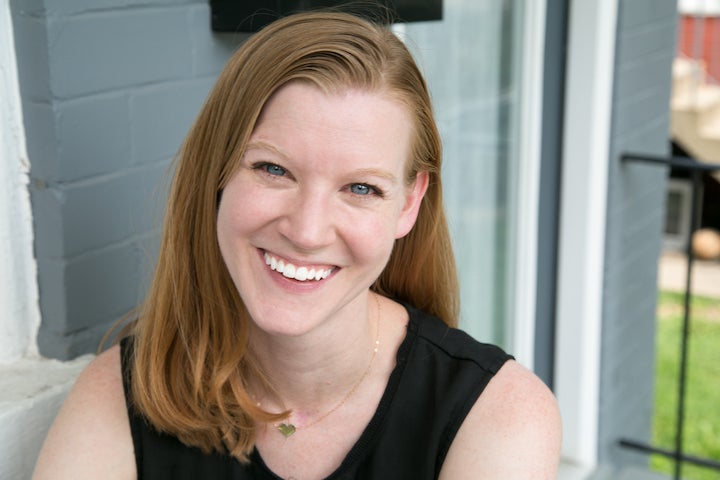
Erica Wright is the author of eight books, including the mystery novel Hollow Bones (Severn House, 2024) and the essay collection Snake (Bloomsbury, 2020). Her novel Famous in Cedarville (Polis Books, 2019) received a starred review from Publishers Weekly and was called “a clever little whodunnit” in The New York Times Book Review. Her latest poetry collection is All the Bayou Stories End with Drowned (Black Lawrence Press, 2017). She is a former editorial board member of Alice James Books and currently teaches at Bellevue University. She lives in Knoxville, Tennessee, with her family.