Danielle Girard: I Wanted To Depict Honest Emotions
In this interview, author Danielle Girard discusses the personal betrayal that inspired her new suspense novel, Pinky Swear.
Danielle Girard is the USA TODAY bestselling and award-winning author of several novels, including the Annabelle Schwartzman. She is also the creator and host of the Killer Women Podcast, where she interviews the women who write todays best crime fiction. A graduate of Cornell University, Danielle received her MFA in creative writing at Queens University of Charlotte, North Carolina. When shes not traveling, Danielle lives in the mountains of Montana. Follow her on X (Twitter), TikTok, Facebook, and Instagram.
In this intetview, Danielle discusses the personal betrayal that inspired her new suspense novel, Pinky Swear, her advice for other writers, and more.
Name: Danielle Girard
Literary agent: Danya Kukafka
Book title: Pinky Swear
Publisher: Emily Bestler Books/Atria
Release date: February 24, 2026
Genre/category: Domestic suspense/literary thriller
Previous titles: Badlands thriller Series: White Out;Far Gone; Up Close;Dr. Schwartzman Series:Exhume;Excise;Expose;Expire;The Ex; The Rookie Club Series:Dead Center;One Clean Shot;Dark Passage;Grave Danger;Everything to Lose;Standalone Novels:Savage Art;Ruthless Game;Chasing Darkness;Cold Silence
Elevator pitch: Lexi is thrilled to reconnect with her best friend Mara Vannatta sixteen years after the tragedy that derailed their senior year of high school. When Mara offers to become Lexi’s surrogate, their friendship feels stronger than ever until, four days before the baby’s due date, Mara disappears.
What prompted you to write this book?
Early in the pandemic, a single scene took shape in my head. For more than a year while writing another book, the scene, which represented maternal instinct at its core, kept returning to me. I knew I had to write this book.
Initially, I started writing it as a police procedural, the way I’d written my first 16 novels. But at the end of 2022, I discovered a profound personal betrayal by the person I trusted most in the world. As I emerged from the fugue of those first months and tried to get back to work, I realized the most devastating crimes rarely end up in shootouts or courtrooms. Instead, they happen in private spaces between people who claim to love each other. With that knowledge, the detective’s story no longer felt pressing or real enough, so I deleted that first draft and started over.
I wrote Pinky Swear to explore what happens when someone you’ve loved since childhood, someone who is practically family, turns out to be a stranger. I sought to write honestly about the real and lasting damage caused not by someone we’ve never met, but by someone who swore to protect us, and how that betrayal causes us to doubt everything—especially ourselves.
How long did it take to go from idea to publication? And did the idea change during the process?
More than five years have passed between the initial idea for Pinky Swear and its publication, and the idea did change dramatically during the process. I’d first written it as a police procedural called The Surrogate before realizing the story needed to come from the perspective of the biological mother. At that point, I deleted the detective character and rewrote it from the mother’s point of view and Pinky Swear is the result.
Were there any surprises or learning moments in the publishing process for this title?
Pinky Swear was my first book with my new agent, Danya Kukafka. Unlike my prior agents, Danya is a highly editorial agent, which means she had a lot of suggestions for the book before we took it out on submission. I did more work pre-submission than I’d ever done before, and it paid off—the book garnered interest from multiple editors and ended up selling at auction. It was very exciting!
Were there any surprises in the writing process for this book?
While Pinky Swear is my 17th published novel, the process of each book still manages to provide surprises. Since I don’t outline, I have to rely on instinct, a deep knowledge of the characters, and a lot of staring at the wall for a story to take shape. In Pinky Swear, my original plan was to write the story from a single point of view character. But when the first draft was finished, it became clear that the story needed more layers to explore the shared history of the three girls, so I went back and added a second point of view from their time together in high school.
What do you hope readers will get out of your book?
I hope readers will recognize their own complicated relationships in Lexi’s journey and find their own hard-won wisdom reflected in these pages. I wanted to shine a light on the kind of pain that comes from betrayal by someone you love, which deserves its own category because it requires us to grieve not just what we’ve lost, but who we thought we were to each other, and to release the future we planned.
More than anything, I hope the book helps readers understand that it’s OK to be vulnerable even after being hurt. Pinky Swear is about how we regroup, heal, and eventually allow ourselves to open up again. During her search for Mara, Lexi meets wonderful people who remind her that, despite the pain, it’s better to risk being hurt again than be closed off to the experience of getting close to someone because of fear.
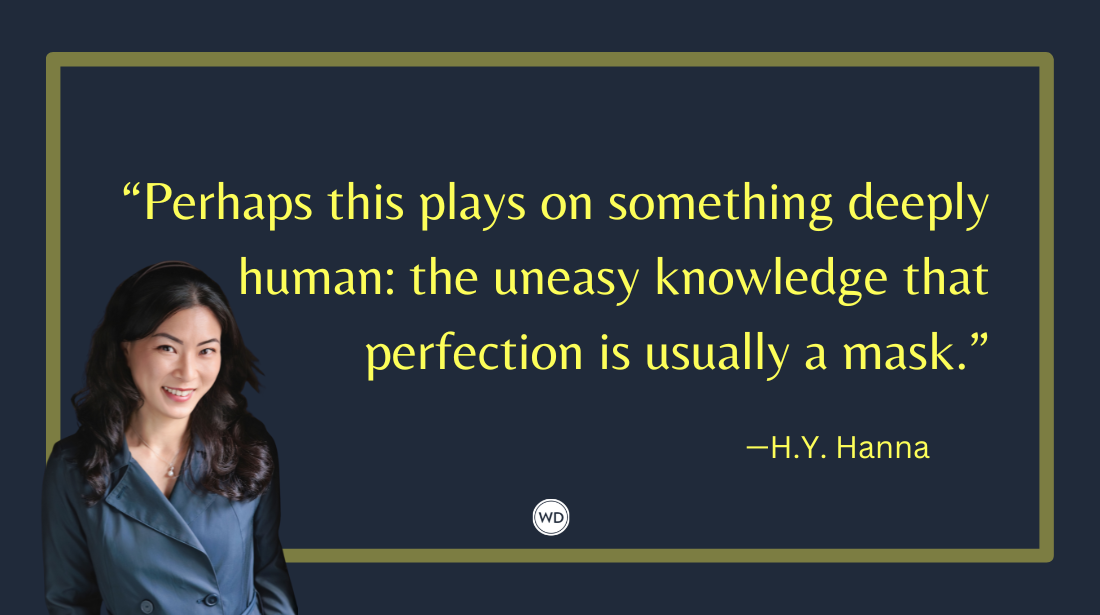
I also want readers to see that we are all multiple people—there’s an ugly underside in each of us, the part that makes bad decisions or isn’t as cautious with others as we should be. I wanted to depict honest emotions, even the ones that aren’t pretty and clean, because that’s the reality of life and motherhood.
If you could share one piece of advice with other writers, what would it be?
First, I would tell aspiring authors to read—widely, voraciously, and enthusiastically. Also, and I know you said one piece, but I would also urge writers to be patient. Good writing takes time and it takes drafts. There’s no use rushing—readers will always be ready for a really wonderful story, so take the time to make the book as good as it can possibly be.