
Bridge Characters
What they are and how to create them to advance your story, solve problems, and engage your readers.
[This article originally appeared in the September/October 2025 issue of Writer's Digest magazine.]
My grandmother had a rough life, raising six children during the Depression. She worked as a charwoman and sold radios door-to-door. I wish I could tell you she saved every nickel to feed the kids, but, well, some of it went to a different, strange, purpose.
Now and then, she’d set off on foot to the fortune tellers in the city. They charged money, of course. My uncles considered that money wasted. My mother, however, understood, if only a little. No one knows what the fortune tellers said, but my mom sensed that they gave my grandma something of value.
What was it? Hope? Reassurance? Perhaps only friendly company over a cup of tea, which would have been a respite from household chaos?
People said the fortune tellers could see into the future, and thereby help you navigate it to best advantage. They were mediums, serving as a bridge between bleak real life and something better. Mind you, no fortune teller worth her salt would agree with the doctor who just told you your cancer is inoperable. No! Things will get better. Maybe even miraculously!
When I read and write fiction, I often consider the bridge characters who populated the secret part of my grandma’s life. And I think it would be good for writers to become more aware of the idea of bridge characters. When we examine something with intention and care, we can begin to see things we hadn’t noticed before, and then we can make use of what we’ve learned.
To connect is to imply separation as a precondition. That right there is a cool thing to contemplate while we’re chomping our morning coffee. How might we define a bridge character in fiction? Simply a character who spans two worlds, with some effect on the action and other characters. Let’s first look at a handful of significant examples, grouped into a few common categories. (Ahead, as usual, you’ll find a spoiler or two.)
The Psychopomp: If you’re unfamiliar with the term, it means a figure that transports the dead to the next world. The Valkyries of Norse mythology were badass women who rode their horses into the still-bloody battlefields and carried their fallen warriors to Valhalla, the home of the gods. The underworld, and the passage from life to death, figures large in mythologies and folklore everywhere. So much lovely symbolism!
Also study the Egyptian god Anubis, the Greek mythological boatman Charon (who ferried dead souls across the river Styx), the Slavic pagan goddess Morana.
The Animal: The horse in The Red Pony by John Steinbeck serves as a bridge between the ranch hand, Billy, and the young boy, Jody. They both love the pony; they get to know and love each other through the pony’s life and death. The animal also facilitates Jody’s grim realization that Billy, whom Jody idolized, can’t fix everything. By extension, Jody learns (along with millions of traumatized young readers) that no hero is infallible. Animals can serve as powerful bridges between humans and a mystical world we don’t understand, as well as between a human and that human’s own emotions.
Also study the white whale in Moby-Dick by Herman Melville, Charlotte the spider in E. B. White’s Charlotte’s Web, and the sextet of cats in Kafka by the Shore by Haruki Murakami.
The Other-Worlder: Dana in Kindred by Octavia Butler is an example of a bridge character who’s also a main character. A modern African American woman, Dana unwittingly travels backward through time to a place where she is enslaved, spanning separate and vastly different worlds. (Yet the worlds are similar, in disturbing ways.) A beleaguered victim, she makes connections both literal and figurative, ultimately prevailing in the end.
Also study Offred in The Handmaid’s Tale by Margaret Atwood, HAL in Arthur C. Clarke’s 2001: A Space Odyssey, Valentine Michael Smith in Stranger in a Strange Land by Robert A. Heinlein.
The Misshapen/Misfit: Caliban in Shakespeare’s The Tempest is half man and half monster, one of literature’s original outcasts. Although he’s the only native inhabitant of the island, he becomes subjugated by Prospero, the powerful newcomer. Caliban reflects and challenges the choices of the other characters, bridging different moral codes, sometimes clarifying, sometimes obscuring. A fascinating literary invention!
Also study Alberich in Richard Wagner’s opera cycle The Ring of the Nibelung, The Creature in Mary Shelley’s Frankenstein, Quasimodo in The Hunchback of Notre-Dame by Victor Hugo.
The Teacher: Teddy Lloyd in The Prime of Miss Jean Brodie by Muriel Spark is an interesting bridge character, though Miss Brodie is more obvious, as she leads her young charges through her unconventional curriculum at Edinburgh’s Blaine School. Mr. Lloyd, the handsome art teacher, serves as a conduit for several of the girls (especially Sandy) between adolescence and the adult world, full of dangerous beauty and sexual obsession. Teachers tend to educate their charges in multiple ways, connecting them to transformative knowledge and experience.
Also study Miss Kinnian in Flowers for Algernon by Daniel Keyes, Botchan in Botchan by Natsume Sōseki, Fagin (one of my fave criminals!) in Oliver Twist by Charles Dickens.
Rock It Your Way
Bridge characters typically don’t suggest themselves during the earliest stages of story development, because, well, until a connection is needed, you don’t think of it. But they can inspire fresh ideas and solve lots of problems.
Get Them There
If you want to get a character to a place they just can’t get to on their own, consider a bridge character. Example: A respected judge has gotten in deep with gambling debts. He can’t pay, and neither can he go and intimidate his creditors with a baseball bat. But one day, he adjudicates a case of a lowlife with connections to organized crime. He lets the guy off easy, then gets in touch to ask a return favor. One favor leads to another, one contact leads to another, one ethical breach leads to another. The lowlife serves as a convenient bridge between the judge’s clean hands and the dirty world of the streets. Eventually, the judge might be forced to hit the streets to save his life or his family … and it will feel real and compelling.
Create Tension
Bridge characters can be used to create tension. Here’s a world. Here’s somebody, all of a sudden, who doesn’t seem to belong in this world. Hmm, why is that? What are they doing here? Maybe we shall see. No doubt we will see; I know and trust this author to play a straight game with me. So, we will learn more about this character … but when? For now, we can only speculate …
Messenger
A messenger essentially is a bridge character. Almost every one of Arthur Conan Doyle’s Sherlock Holmes stories begins with a messenger (a client with a problem) who serves as a bridge between Holmes and nefarious criminals and their deeds.
A simple envelope, sitting there on the dressing table…
Servants
Servants can be terrific bridge characters. Let’s say you need your main character, who happens to be a countess, to make contact in secret with a humble blacksmith miles away. It’s not going to make sense to have her just saddle up and ride cross-country to his place. She’d be seen, even if she tries to disguise herself leaving her own house. People would ask questions. She needs a bridge.
So, the countess directs her maid to carry a parcel to the smithy. Splendid! Look what we can do! First off, is the maid to be trusted? What do we know of her? Does she know what’s in the package? What might her own secret objectives be, and why? What obstacles might get in her way? What helpers might appear? Do we need a subplot here? Do we want one? Could be good!
Linked Bridges
As we’ve seen, in science fiction and fantasy, bridge characters can literally span worlds: useful when you have to keep two populations of characters separate. A cadet from the local space academy can drunkenly steal a small craft and then get marooned in the next galaxy over. Survival challenge! Exchange of folkways! Revelation of valuable resources, information! Forbidden love! The overlord’s daughter stows away on the return journey! Wonderful stuff.
Bridge characters don’t have to go solo; you can link them together. Say you need to get your space cadet from Galaxy A to Galaxy D, but in his world, his ship can’t make it that far. So yeah, here comes a possible ally. This new character lives in Galaxy B, where they’ve figured out how to use better technology to get over to Galaxy D. Trouble is, Galaxy B has been at war with Galaxy D for many time units, and a trip there in a ship associated with Galaxy B would be terribly risky.
Linked bridges can also function in non-physical ways. See the next point.
Philosophical Bridges
Bridge characters are great at connecting ideas and emotions. Philosophical, moral, political, metaphorical. I like to call a certain set of people “peacemakers:” therapists, clergy, spiritualists. The peacemaker can bridge any number of characters. Think of a family therapist, who works to help everybody understand one another, bridging gaps by guiding clients to communicate honestly and with some care. A trusted counselor or clergyperson can be the repository of countless secrets, as well: rich fodder for plot turns.
You can easily adjust an existing character to be a philosophical bridge. One good deep conversation while dressing for combat or branding the cattle or shutting down the reactor, can connect a character with new ideas, a better (or worse) conscience, renewed zeal for an old cause.
Unexpected Bridges
Want to push boundaries, get wild? A family can be a bridge character. An organization. A SWAT team. A shared needle. Think of sex workers and their johns, think of the fortune tellers, the town sleazeballs, stray dogs. Can a place be a bridge character? Sure, in a way. How about a spot where strangers regularly brush shoulders: a concert hall, the park where guys cruise specifically on Wednesdays at lunchtime, the farm market.
Adapting Old Bridges
Be sure to study old models and rip them off. Remember the Valkyries? Think what you could do with a modern one! Turn it into a prison escape! “Ronaldo’s in the state pen for life [a living death], but he didn’t do it. OK, maybe he did, but I love him! I’ve got bus tickets to Florida [paradise]. I’m getting him out. Tonight! You gonna help me, or what?”
A Note of Caution
Take care, and be aware, of the stereotypical “charmed minority” or disabled person. In 2001 the film director Spike Lee coined the term “the magical Negro” to describe a stock character imbued with special gifts or moral authority, who by means of their insight or even mystical powers rescues the white folks or solves problems for them. (Employed by white authors and directors to, presumably, signal their open-mindedness in a cheap way.)
Even if you haven’t encountered the term before, you can instantly understand it and bring to mind examples such as John Coffey in Stephen King’s The Green Mile and Jim in Mark Twain’s Adventures of Huckleberry Finn. Consider also the fairly numerous blind prophets in ancient mythology (they can’t see, but they foresee) as well as the “noble savage” trope.
Then there’s the mentally different, the character disabled in one way but specially enhanced in another, such as the guy who can’t button his coat properly but can compose a symphony in an hour.
I’ve heard it argued that Harper Lee’s Boo Radley (To Kill a Mockingbird) fits this category, but I disagree. He’s just a shy guy who prefers to live behind closed doors and do the right thing. The children—imaginative, naïve, and careless—build Boo into a demon.
Boo is a bridge from dark to light. He emerges to do good in the dark, then emerges to the bright light of the children’s world to save them and to powerfully facilitate their maturing. That done, he returns to his world, guided, childlike, by the child who is now just about as much of a grownup as she’ll ever need to be.
A non-minority, able-bodied, neurotypical author must be cautious about these things, but not to the detriment of the work. As a white, able-bodied, neurotypical author, I’ve written heroic minority and disabled characters as well as non-heroic ones. As long as you can reasonably defend your choices, I say you’re good. But you won’t please everybody.
*****
Bridges—whether wood, stone, or steel—are functional and beautiful. We’re drawn to them. There’s usually a pretty good view from a bridge! Consider all that as well, when you work with your characters and their wonderful complexities!
Further guidance
Questions to prompt bridge characters:
- Is something lacking your story, but you don’t know what? Honest thought here. Write down what’s worrying you.
- Is there a relationship between two characters that somehow isn’t right?
- Do you have a character who’s alienated, out of touch, trying to reach something?
- Action lagging? Maybe a bridge character can foment a subplot.
- Drama feeling tepid? Let your mind wander around that problem before trying to get specific. Make notes.
- Identify two elements that need bridging. Two people? A person and a place?
- Consider the current power dynamics between them. Who’s superior, who’s inferior? Can you invert that? Might that be cool?
- If you’re really stuck, start with the most basic bridge character: a stranger who comes to town. Blank canvas!
- You got this.
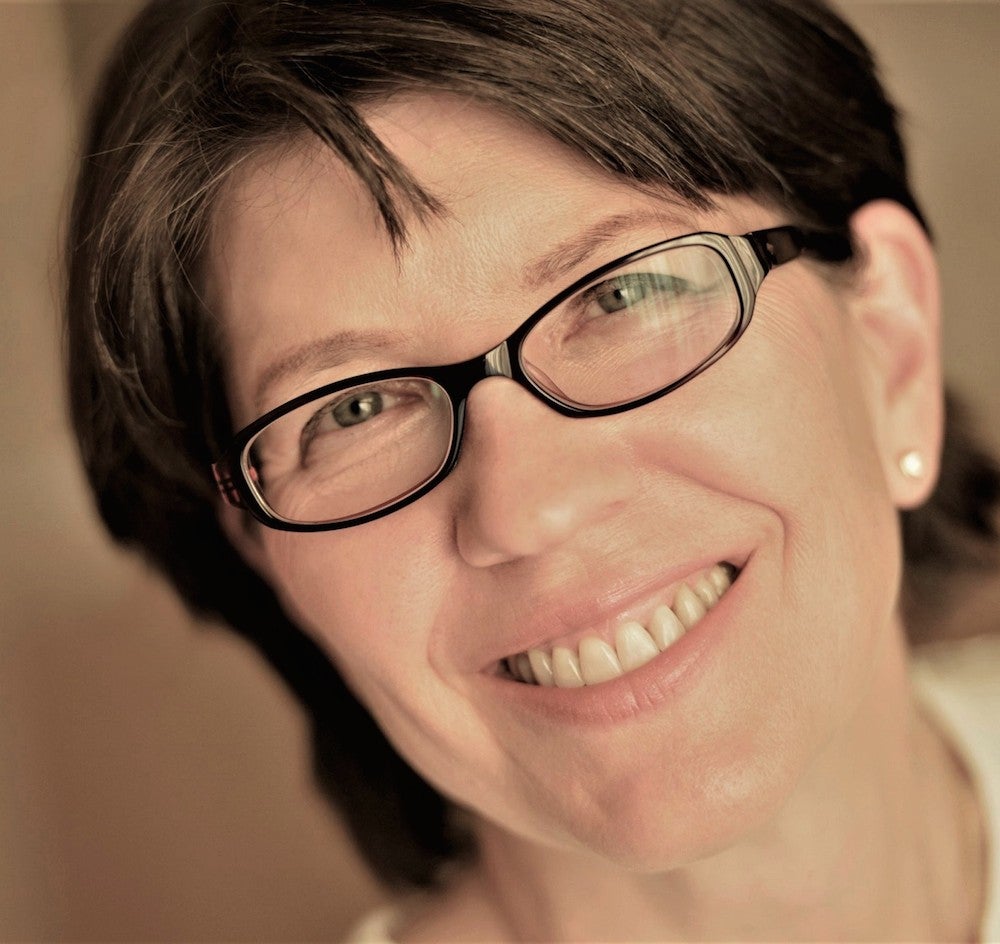
Elizabeth Sims is the bestselling author of seven popular novels in two series, including The Rita Farmer Mysteries and The Lillian Byrd Crime series. She's also the author of the excellent resource for writers, You've Got a Book in You: A Stress-Free Guide to Writing the Book of Your Dreams, published by Writer's Digest Books.