

Beauty, Pageantry, and the Hidden Narrative: Writing Against Assumptions in Memoir
Author Lesley Yvonne Hunter discusses the power of writing against assumptions in memoir by focusing on her own story.
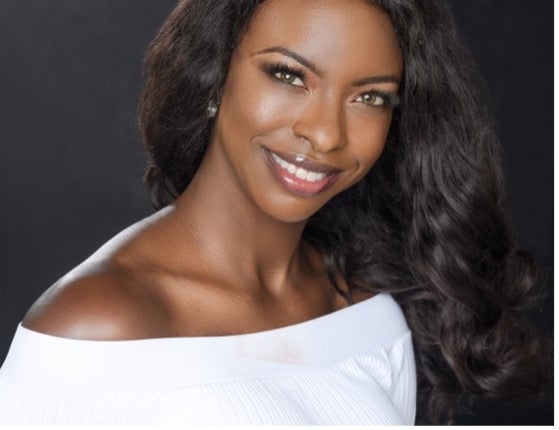
When readers first encounter me in photographs—crowned, polished, smiling—they often assume they already know my story. Beauty pageant winner. Composed. Confident. Disciplined! The narrative writes itself before I type a single word. But the truth is, the more polished the exterior, the more carefully I had learned to conceal what lived beneath it: childhood trauma, insomnia that unraveled my mind, psychiatric hospitalization, and the long, humbling process of rebuilding a nervous system that had been pushed beyond capacity.
Writing my memoir, Madness to Manifestation, forced me to confront a powerful craft question: How do you write against assumptions the reader doesn’t even realize they’re making? The answer, I discovered, is not to reject the polished image, but to use it as contrast. Beauty, in my case, became narrative misdirection. The crown wasn’t the story; it was the surface tension. The real narrative lived underneath.
When you write from inside a misunderstood identity ("beauty queen," "executive," "athlete,” "public figure"), you are not just telling your story. You are dismantling the reader’s expectations in real time. That tension creates narrative energy. The key is restraint. If you immediately dismantle the image, you lose the contrast. If you lean into it too long, you risk reinforcing the stereotype. The craft lies in allowing the reader to hold both truths at once: the polished exterior and the private fracture. For me, that meant describing moments of composure alongside moments of unraveling. A crown and a hospital bracelet. A public smile and a sleepless night. A disciplined posture and a mind accelerating beyond control.
This juxtaposition does something powerful. It invites the reader to reconsider not just the narrator, but their own assumptions about who struggles and who doesn’t.
Beauty, like success, often functions as camouflage. We assume that someone who looks composed must feel composed. We assume that someone who presents confidently must be internally stable. These assumptions are not malicious—they are human shortcuts that flatten complexity.
Writing against them requires vulnerability and precision. Oversharing can feel sensational. Under-sharing can feel evasive. The goal is emotional truth without spectacle.
Here are three craft principles I learned while writing against assumptions:
- Let contrast do the work. Instead of explaining that appearances can be misleading, place two opposing images close together. The reader will feel the dissonance without being told what to think. For example, describing a poised public appearance followed by a night of insomnia allows the reader to experience the gap.
- Write from integration, not crisis. If you write only from the height of breakdown, the story can feel chaotic. Writing from a place of reflection allows you to hold both the beauty and the fracture with clarity. The distance creates trust.
- Resist the urge to vilify the image. I did not want to reject the part of me that enjoyed pageantry, performance, and polish. That was also authentic. The goal was not to dismantle beauty, but to deepen it, showing that strength can coexist with sensitivity.
There is also a deeper question beneath this craft challenge: Why do we assume beauty and struggle cannot coexist?
Part of the answer lies in discomfort. If someone who looks “together” can also be unraveling, then anyone can. That realization removes the illusion that mental health struggles belong only to certain types of people. It makes the conversation more universal and more honest.
Writing from this space required me to accept my own duality. I am both the woman who stood on a stage and the woman who sat in a psychiatrist’s office adjusting medication. I am both polished and porous. Disciplined and sensitive. Composed and complex. Once I stopped trying to choose between those identities, the writing became clearer. The crown no longer contradicted the collapse. It framed it.
In that framing, I found something unexpected: the very assumptions I once feared became the doorway into deeper storytelling. The reader’s expectations created tension. My vulnerability created resolution. That is the hidden narrative, and it can be quite miraculous. Beauty nor image hides pain, but both can coexist. Telling the truth about that coexistence expands what we believe is possible, both on the page and in ourselves. There is also a broader purpose in writing against assumptions, especially in memoir and narrative nonfiction. When we complicate a reader’s expectations, of course we deepen our own illustrious story. And surprise! We also expand what readers believe is possible within their own lives.
Memoir, at its best, is not confession. It is recalibration. It shifts the reader’s internal map. When someone who appears composed reveals vulnerability, or someone associated with beauty speaks honestly about trauma and mental health, the reader is invited to reconsider their own definitions of strength. The story becomes less about the individual and more about "permission" / support.
This kind of narrative disrupts stereotypes without lecturing and humanizes without sensationalizing. It allows readers to recognize themselves in places they might not expect. A reader who has never related to a beauty queen may suddenly recognize insomnia. A reader who has never experienced trauma may recognize perfectionism. The surface identity becomes an entry point, not a barrier.
From a craft perspective, this kind of tension also gives memoir structure. Instead of a linear recounting of events, the story becomes a conversation between perception and reality. What the reader assumes at the beginning evolves as layers are revealed. This is especially powerful in nonfiction that explores mental health.
Much of the stigma around psychological struggle persists because we unconsciously assign it to “other” people. When writers complicate visible identities (beauty, success, leadership, composure), they collapse that distance. They show that mental health is a human spectrum, creating big impact beyond the page. Readers may feel less alone in their own contradictions. They may recognize that composure does not mean they must hide vulnerability. They may see that sensitivity is not incompatible with strength.
Check out Lesley Yvonne Hunter's Madness to Manifestation here:
(WD uses affiliate links)