When to Grant Copy Approval (And When Not To)
Copy approval can get a little tricky for writers, so freelancer Chris Saunders discusses when to grant copy approval and when to avoid it.
Copy approval, when a third party is granted early access to an article before it is published in order to check it for accuracy, is one of those things that causes more problems than it probably should. Not least because nobody can seem to agree on the correct protocol.
The majority of editors I have worked with have a strict blanket policy denouncing it in all its forms, citing the need to maintain strict levels of journalistic integrity. “Once you start letting people change what you write to suit their own agenda, you may as well hand them full control,” one editor told me.
And it is a valid point. There is also the danger of overcomplicating matters. If you grant one party copy approval, in the interests of fairness you should offer every contributor the same privilege. If there are only one or two, there shouldn’t be much of an issue.
But imagine the article you wrote includes material from a dozen or more different sources, they all demand copy approval, and then they all want to amend the copy for some ambiguous (no doubt marketing-related) reason. That level of interference would send you right back to the drawing board. On one memorable occasion, a company asked me to re-write an entire feature because I had inadvertently placed one of their main competitors ahead of them in the copy, which in their view was tantamount to endorsement.
High-profile celebrities often let the media know in advance what topics they don't want to discuss, and at the same time making clear the topics they DO want to discuss. I once interviewed Jason Statham for a magazine and was told in no uncertain terms that under no circumstances would he be discussing a certain actress with whom he had recently been romantically linked in the tabloid newspapers.
Some take it several steps further. I remember attending a press conference featuring the entire cast of the Avengers, and being quietly informed at the start that any question not specifically related to the topic at hand (i.e., the movie) was off the table and may lead to the journalist responsible being ejected from the venue. The next few minutes were a frenzied blur of panicked reporters hastily revising their notes.
You might think requests like this are perfectly reasonable, and in a sense you would be right. Yes, celebrities have media commitments but nobody should be expected to talk about things they don't want to. But on this occasion and others like it, the result was every journalist in the room going back to their respective editors with slightly altered versions of what was essentially the same overly-sanitised article. That's what happens when everyone is given the same answers to the same questions.
An old trick I learned is to save any potentially problematic questions until the end of the interview or press conference. That way, if sparks fly you already have enough material to write your article. However, by doing this you run the risk of burning your bridges and getting yourself removed from certain media lists.
One instance where copy approval is not only justified but recommended, is when you are writing about unfamiliar topics, or using material translated from another language. In the case of the latter, always have the content, and in particular any quotes, double checked and cross-referenced, preferably by actual people more attuned to a language’s complexities than an online resource.
Technical writing that perhaps contains a lot of numbers or calculations can also be a minefield, as it is very easy to get something wrong. All it takes is one misplaced decimal point. And if that happens, not only do you and the title you are writing for lose credibility, but you also lose the respect of the people you are writing about and they may never have anything to do with you again which can be very damaging to a freelancer when reputation is everything.
That said, errors and typos are much easier to correct in the modern age where the majority of titles are digital. Websites and online magazines can be corrected later, print can’t. Once that is out there, mistakes and all, it can’t be taken back. And one way to avoid this is to offer relevant parties copy approval. Just use it sparingly.
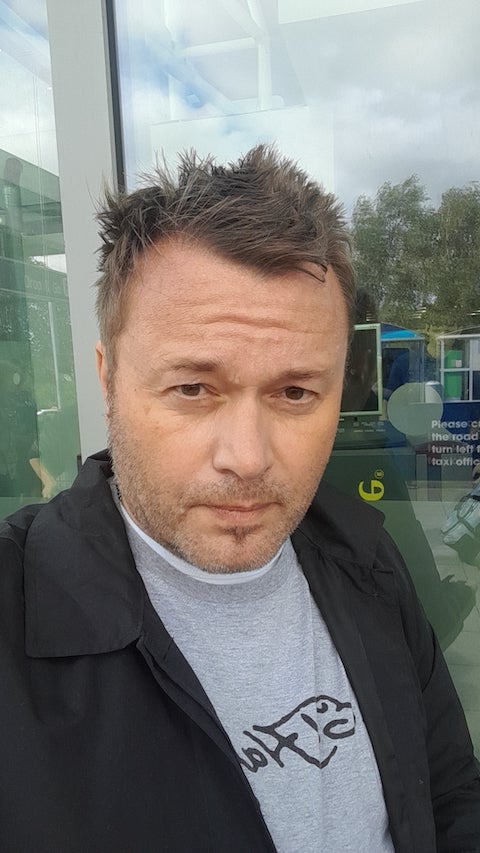
Chris Saunders, who writes fiction as C.M. Saunders, is a writer and editor from New Tredegar, Wales. After teaching English in China for several years he worked extensively in the publishing industry, holding desk jobs ranging from staff writer to associate editor, and is currently employed at a trade publication. His fiction has appeared in numerous magazines, ezines and anthologies around the world including The Literary Hatchet, Crimson Streets, 34 Orchard, Phantasomagoria, Burnt Fur, and DOA volumes I and III, while his books have been both traditionally and independently published. His latest release is the horror western Silent Mine on Undertaker Books.