Giving Your Thriller the Relentless Pace and Gripping Tension It Needs
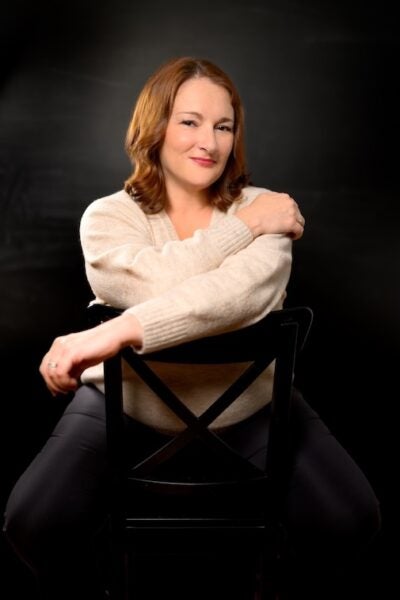
Award-winning journalist Jennifer van der Kleut shares four tips for giving a thriller the relentless pace and gripping tension it needs.
What makes a thriller “unputdownable?” Is it a unique plot? Dynamic characters? A relentless, action-packed pace? A killer final scene?
There’s no one right answer to that question; to be frank, a combination of all of those things is probably what will give a thriller manuscript its best chance at succeeding in today’s world of commercial genre fiction.
But I’m here today to talk about one element in particular—pacing.
It’s one of the things for which my debut thriller, The Better Mother, gets the most compliments, and I’m very proud of that. Early reviewers call it “an action-packed rollercoaster ride,” “deliciously fast-paced,” and one in which “every chapter raises the stakes.”
But I didn’t achieve those things with my manuscript on the first try—or even the 20th, to be honest. It took a lot of revising, slashing, and fine-tuning to get there, and now that I’ve done it, I’m happy to pass along some tips to others who are trying to achieve the same with their own drafts.
Balancing Exposition With Action
It’s a difficult question to answer—where is the right place to start my story?
It’s a conundrum that’s not exclusive to thrillers—how to start your novel in the right place, and balance the amount of introduction and backstory with forward momentum. I wrote several different versions of my first chapter before I finally landed on the one that my team and I felt started in the right place.
The Better Mother centers on 34-year-old Savannah Mitchell, who is just managing to put her life back together after a devastating breakup. A year later, she is finally ready to put herself out there again and has a brief, casual fling with Max, whom she meets at a bar. They only see each other a few times and then fizzle out—but six weeks later, she discovers she’s pregnant and has to get back in touch to deliver the news.
The “thriller” element comes in when Max informs her that in the time since they stopped seeing each other, he has gotten back together with his ex, Madison, who wants to help the two budding parents as they try to navigate co-parenting. After a while, it becomes clear that Madison has sinister motives, and she is obsessed with Savannah’s baby.
So, as a writer, where would you think the best place to start this novel would be?
Some writers might say the night Savannah and Max first meet each other at that bar. And that’s not a bad idea—it’s just not the best one, particularly when you only have 80,000 to 90,000 words in which to tell the entire story if you want it to be a commercial length that will be attractive to traditional publishers. If I had started my novel in that place, it would have taken at least two or three chapters, if not more, to get to the point where the “thriller” element comes into play, and that’s too long. While it still might make for an interesting story, in today’s world, where “popcorn thrillers” like Frieda McFadden’s books are the top sellers, many seasoned thriller fans would check out before they get there. A beginning like that would lend itself better to literary or contemporary fiction, or perhaps a romance.
What makes The Better Mother a thriller is the fact that Savannah wants her baby’s father to be involved in her child’s life, if at all possible, and that’s going to be difficult because his current partner is definitely the jealous, obsessive type. So we need to get to that part of the story as quickly as possible.
But we also want readers to sympathize with and root for our main character, who I tried to write as a messy, relatable female protagonist who’s realizing that starting over in her mid-30s on one income with no partner isn’t easy, but she wants to prove to herself she can be independent and do it. So we need to introduce Savannah to readers with some exposition, but try to do it without slowing down the pace too much, thereby getting us to the “thriller” element—meeting our villain, Madison.
Therefore, the place I decided to start my story is the moment Savannah realizes she’s pregnant. Her best friend Ellie is there to help her deal with the shock of the news and helps convince her that getting in touch with Max is the right thing to do. So readers are immediately dropped into the middle of the action.
Getting inside Savannah’s head as she learns she’s pregnant, and completely freaks out over that fact, makes for both a compelling and emotional action scene, and the perfect way to introduce exposition. In just a page or two, we learn why Savannah is so scared about her pregnancy. We also learn a bit about who Max is, and how they met, as Savannah confirms Max is the father.
Fitting in Backstory Among the Action
A popular tool of many commercial thrillers today is to tease something dark and mysterious in a character’s past, and then slowly dole out more and more clues to what that story is over the course of the entire book. In order to do that, you can’t give it all away in the first chapter—and by not giving it all away at once, you allow the story to continue its forward momentum with action, and little bits of backstory sprinkled here and there, spread out. That’s what I tried to do with The Better Mother.
I could have written a big “info-dump,” as many readers and writers call them, in the first chapter, telling Savannah’s entire backstory, including how her father abandoned her and her mother when she was a baby, forcing them to have to struggle to make ends meet in a single-parent household, which adds some interesting character history. Instead, I reveal that bit of backstory around chapter five, when Savannah’s mother and Max accompany her to one of her first doctor appointments, and it leads her to reflect back on her childhood.
In true thriller style, we don’t learn our antagonist Madison’s backstory until about two-thirds of the way into the book, as her true nature and evil motives begin to come to light, and we realize how precarious Savannah’s situation really is with Madison involved. It’s much more fun for the reader to get small, eerie clues here and there as the story progresses, which serves to ratchet up the tension more over each chapter until the final, explosive conclusion.
Cutting the Fat
The very first draft of The Better Mother was 122,000 words long—about 25 percent longer than it needed to be. But you know what? That’s okay. One of my favorite quotes is by critically acclaimed writer and producer Jordan Peele: “When I’m writing the first draft, I’m constantly reminding myself that I’m simply shoveling sand into a box, so that later I can go back and build castles.”
In other words, write down any and every scene, and any tidbit of backstory for your characters that comes to mind on the first pass—later, you’ll go back and pick only the best ingredients to keep that will build that winning castle. In my early drafts, my story not only started in the wrong place, but there were too many slow scenes in between the action, too many extraneous chapters that did nothing to move the story forward.
So, I had a lot of fat to cut—but I much prefer that situation over one in which my agent or editor tell me my story has holes in it, or is missing crucial elements that I have to struggle to go back and add or elongate later.
Getting Characters Outside Their Heads
It’s easy for authors to fall into the pitfall of having too many scenes in which the character is trapped in their own head, trying to untangle a thread, find an answer to a problem, or explore their feelings about something. Those can really slow down the plot, tension, and forward motion of a story. I attempted to correct that situation in my manuscript by letting that inner monologue come out in my main character’s reactions to things, not taking up space or entire scenes dwelling on it.
I also tried to cut the fat of too much character “downtime.” My novel took place over the course of about eight months, between the time Savannah finds out she’s pregnant and the time she’s ready to give birth. Some multi-generational sagas can span entire decades, yet authors manage to find ways to do that without slowing down the forward motion of the story.
To effectively and interestingly tell Savannah’s story, I didn’t need to tell her bedtime routine in great detail, or create an entire, detailed project for her to work on in her job—rather, I wove those details of her life into action scenes that served the ultimate goal for my story. I do give some detail about Savannah’s job as an associate at a San Francisco-based marketing agency, but only in enough detail as it relates to the overall plot.
When Madison starts to mess with Savannah’s life, one area she targets is Savannah’s job, which Madison knows she needs in order to survive on her own and be solvent enough to raise a child by herself. So I give just enough detail so the reader can see how one small action by Madison can have huge consequences for Savannah’s employment.
So, the takeaway is, if it doesn’t serve the overall master plot, it’s probably fat that needs to be cut. If it’s important character development or backstory, find a way to sprinkle it in among action scenes that propel the story forward.
There’s no one right way to do it, but hopefully these tips help aspiring authors—especially those in the suspense/thriller genre—to craft a well-written, forward-moving plot.
Check out Jennifer van der Kleut's The Better Mother here:
(WD uses affiliate links)