



The Wild Things Aren’t Okay: The Origins of My Latest Novel
Author Zoje Stage shares her experience of witnessing the wild things near her home, their struggle with development, and her latest novel.
After decades of living in apartments that lacked any outdoor space, I became a homeowner in March of 2020. The first neighbor I saw after moving in was a peregrine falcon, sitting on a branch still bare from winter. And within two months, there was a doe sleeping in the ivy 10 feet from my backdoor. She was silky and plump and had a new fawn, who slept elsewhere for safety: For a time after they're born, fawns aren't strong or fast enough to run from a predator, but nature has blessed them with two invisibility cloaks—spotted backs, which make them look like the sun-dappled ground, and a lack of odor. This lack of smelling like anything edible is what made it safer for the doe to keep her distance for some portion of the day.
Lest you think I'd moved to the country, I live in a residential neighborhood in the heart of Pittsburgh. But my back deck abuts a wild slope, an uneven triangular acre that can't be built on. And it quickly revealed itself to be the unexpected, magical extension of my home.
Or, perhaps more accurately, I became a guest in a fragile domain, a witness to the cycles of abundant life.
Nearly year round, I put out fresh water (in a colorful glass bird bath) and scatterings of black oil sunflower seeds, peanuts, and the occasional fruit or vegetable. The birds, chipmunks, and squirrels only partake in the seeds, while the deer also love strawberry tops. The groundhogs devour the remains of my slightly-wilting salad, and the shy rabbits seem to settle for leftovers. The raccoons have turned out to be pickier eaters than I expected—given their reputation as "trash pandas"—and consistently refuse offerings of organic baby carrots.
The animals know me as a source of snacks, but most of the time I feel like a rather helpless steward, unsure how to do more for them.
I've cried over a button buck who limped around for weeks with an injured leg. And fretted over twins born to a weak young doe who died while the twins were still quite small; to my relief, they were adopted by a doe with a similarly-aged fawn.
I rushed an injured rabbit to the Wildlife Rehabilitation Center, but it had suffered neurological damage and couldn't be saved.
I watched with a heavy heart as a brawny, aggressive groundhog chased away my beloved three-legged groundhog and her quartet of kits. (Baby groundhogs resemble fluff balls—or tribbles—with feet; they were so cute I hadn't even gotten mad when they ate all the flowers I'd just planted.)
And this spring I mourned for the numerous squirrels who didn't make it through winter, which was unusually harsh with deep snow and relentless weeks of frigid temperatures.
These were all natural tribulations, I suppose, but it doesn't change my wish that I could give these creatures an easier existence; there are so many things working against them. The poison traps the HOA sets out for mice and voles. The streets and cars that dissect the deer's territory. The loss of homes for birds, squirrels, and raccoons as the HOA relentlessly cuts down trees. The long swath of vegetation destroyed by the cable company. The crushing of tiny creatures beneath the tread of heavy machinery—their operators indifferent to the sanctuary they've invaded in their mission to Do Their Jobs.
I've stood in front of backhoes and yelled at men with chainsaws to try and get them to retreat. But whatever momentary progress I make, the HOA ends up giving them permission to continue their destruction of our fragile, mini ecosystem. Every time, I'm reminded of what poor caretakers we humans have been on this earth—my urban microcosm emblematic of our global ecosystems.
Our entire planet is at the mercy of human industry.
Human advancement has valued pavement over wildflowers, homes and food for ourselves but not for our animal neighbors, and competitive industry over cooperative coexisting. Contrary to popular consumption, humans don't own the air, the soil, or the water. And historically, instead of looking for compassionate—or even well thought out—strategies for coexisting, humans resort to the base instinct of killing. And when new problems arise from those actions, the solution again is to do more killing.
This is not sustainable. The natural world isn't something that exists somewhere else—it isn't a place you have to travel to. It surrounds us; we are in its midst.
You may have noticed I have not mentioned my human neighbors who live in this townhouse complex. And for a simple reason: They can speak for themselves. These animals cannot. I don't worry about the people or weep for them: They can look after themselves. I think we all understand by now that animals grieve—whales, elephants, house cats. It's fully reasonable to consider that the creatures all around us suffer because of things we do, intentionally or not.
My inability to comprehensively protect this magical extension of my home has permeated my consciousness. And it led me to writing a story that reveals this conflict—and where I could side with my animal neighbors. In fiction, I plotted a tale where impossible evolutionary changes help wildlife tip the scale. In real life, the victories are smaller: spotting out my window as a pair of rabbits frolic in the wet brush at golden hour; keeping a watchful eye on a doe and her wobbly-legged newborn, huddling under the crabapple tree in my little garden during a thunderstorm.
It is an honor that these creatures feel safe in my proximity. But I am not enough. It isn't enough.
Check out Zoje Stage's Something of a Calling here:
(WD uses affiliate links)
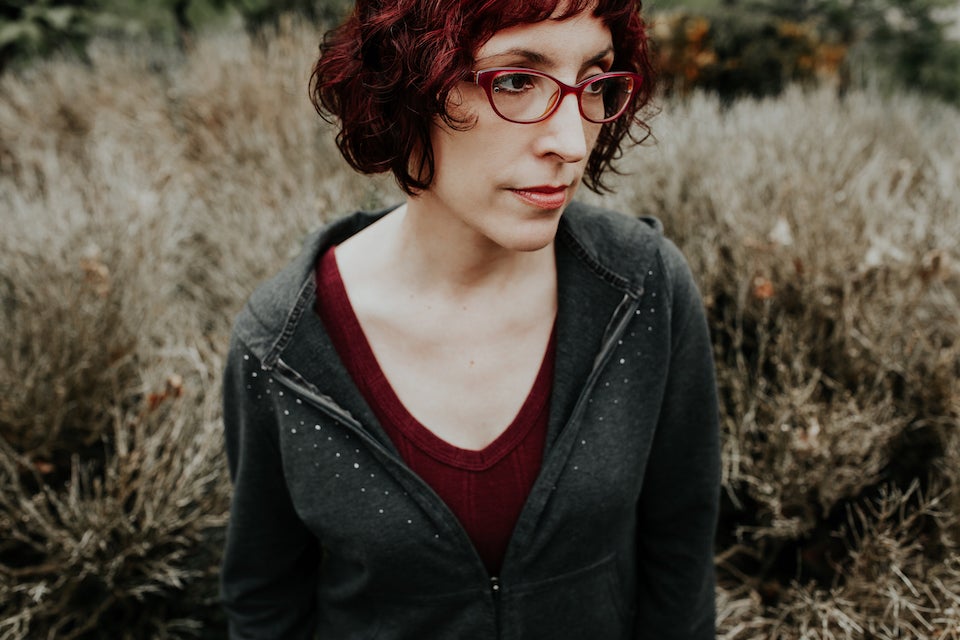
Zoje Stage is the USA Today and internationally bestselling author of Baby Teeth, Wonderland, Getaway, Mothered, and Dear Hanna. She lives in Pittsburgh with her cats. (Photo credit: Gabrianna Dacko)


